African Grey Parrot Lifespan: Best Care Guide (2026)
Updated November 1, 2026
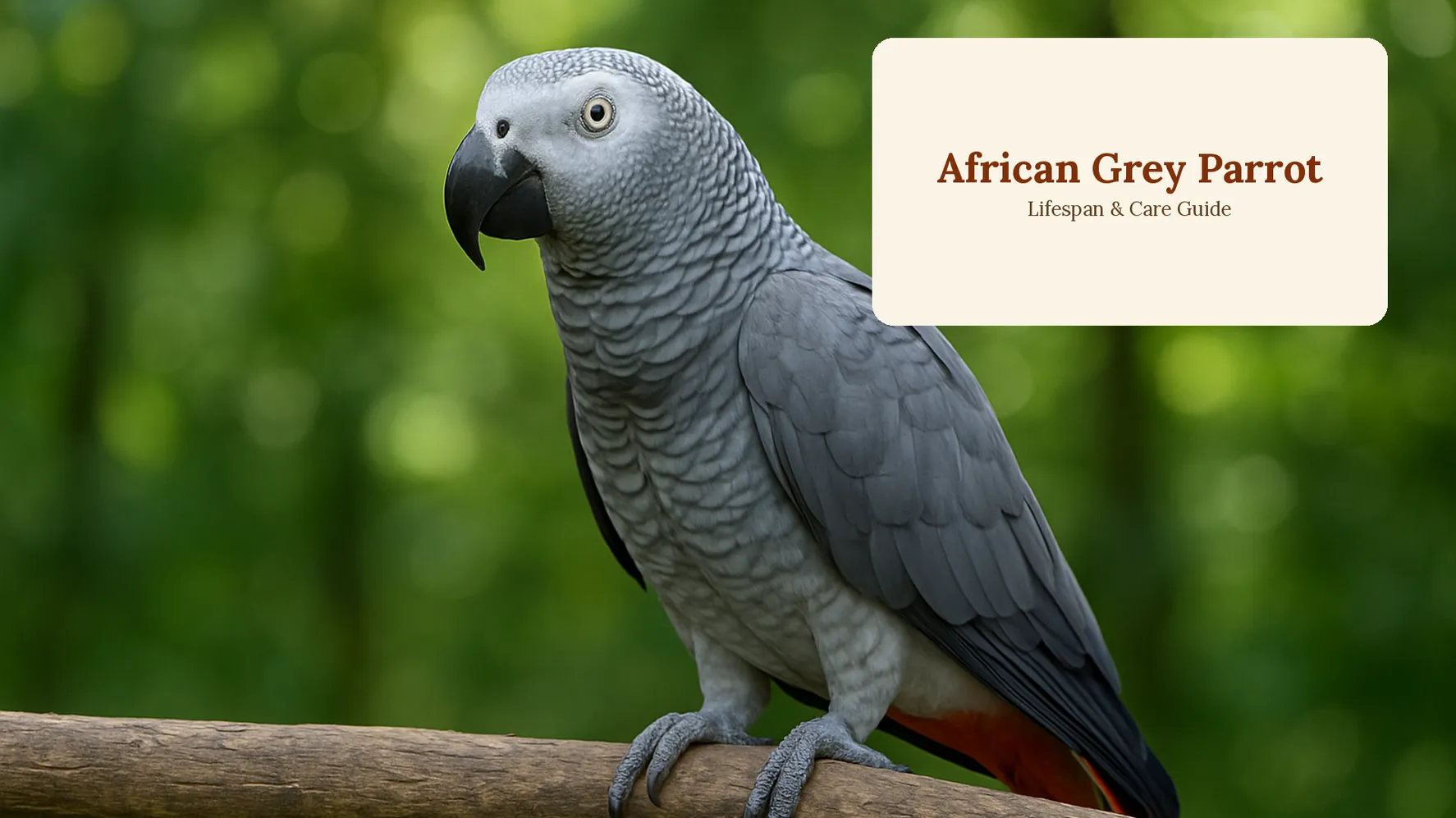
If you are wondering about the african grey parrot lifespan before bringing one home, you are asking exactly the right question. An African Grey is not a five or ten-year commitment like a dog or cat — with the right diet, housing, and veterinary care, these birds can easily outlive the person who raises them.
Table of Contents
-
Daily Care That Supports a Longer African Grey Parrot Lifespan
-
African Grey Parrot Lifespan Compared to Other Popular Species
This guide breaks down realistic life expectancy numbers, the life stages an African Grey moves through, and the specific care habits that add healthy years to your bird’s life.
How Long Do African Grey Parrots Live?
In captivity, a well-cared-for African Grey typically lives 40 to 60 years, and some individuals have been documented living past 70. In the wild, where predation, disease, and food scarcity shorten life expectancy, African Greys usually live closer to 20 to 30 years. The gap between wild and captive lifespans comes down almost entirely to consistent nutrition, a predator-free environment, and access to veterinary care.
Both subspecies — the Congo African Grey and the Timneh African Grey — share a similar lifespan range, though some keepers report Timnehs maturing slightly faster and maintaining robust health into their senior years. For a closer look at how the two compare beyond lifespan, see our Timneh vs. Congo African Grey comparison.
Factors That Influence African Grey Parrot Life Expectancy
An African Grey parrot’s life expectancy is not fixed at birth. It is shaped year over year by a handful of controllable factors:
-
Diet quality: A pellet-based diet supplemented with vegetables and limited fruit supports stable weight and organ health over decades; seed-only diets are linked to fatty liver disease and shortened lifespans.
-
Calcium and vitamin D3 levels: Chronic calcium deficiency is one of the most common preventable health issues in African Greys and can lead to seizures and bone problems if left unaddressed.
-
Mental stimulation: Chronic stress and boredom are associated with feather-destructive behavior and immune suppression, both of which can shorten a bird’s functional lifespan.
-
Routine veterinary care: Annual wellness exams with an avian vet catch problems — respiratory issues, organ changes, beak and nail overgrowth — long before they become life-threatening.
-
Environmental safety: Non-stick cookware fumes, aerosols, and other airborne toxins are fatal to parrots in minutes; a bird-safe home is a prerequisite for a long life, not an optional upgrade.
-
Genetics and hatch history: Birds from a DNA-tested, hand-raised breeding program tend to start life with fewer inherited or early-developmental health issues than birds from unknown or high-volume sources.
African Grey Life Stages: What to Expect at Each Age
Caring for an African Grey well means adjusting your approach as the bird ages, since the african grey parrot lifespan unfolds in distinct stages. Here is what typically changes at each stage:
-
Chick and weaning (0-1 year): Rapid growth, hand-feeding transition, and the start of socialization. Early handling during this window shapes lifelong temperament.
-
Juvenile (1-3 years): Dark juvenile eyes lighten toward the adult pale yellow iris. This is the prime window for training, talking development, and establishing a daily routine.
-
Adult (3-25 years): Peak physical condition. Diet consistency and enrichment matter most here to prevent the slow onset of nutritional or behavioral problems.
-
Mature adult (25-40 years): Metabolism begins to slow. Watch for subtle weight changes and keep up annual bloodwork to catch early organ or joint changes.
-
Senior (40+ years): Reduced activity, softer perches to ease joint pressure, and more frequent vet visits (every 6 months) help senior Greys stay comfortable well into their later decades.
Daily Care That Supports a Longer African Grey Parrot Lifespan
General African Grey care — diet ratios, enrichment schedules, and sleep needs — is covered in depth in our Congo African Grey care guide. The habits below are the ones most directly tied to long-term health and longevity specifically:
-
Offer a varied, pellet-based diet (60-70% pellets, 20-25% vegetables, 5-10% fruit) rather than a seed-heavy mix.
-
Provide 10-12 hours of uninterrupted, dark sleep nightly — chronic sleep deprivation is an underrated driver of long-term health decline in parrots.
-
Rotate foraging toys weekly to keep the bird’s mind active; understimulated African Greys are prone to feather plucking, which can mask or worsen underlying medical issues.
-
Schedule annual (or biannual for senior birds) wellness exams with an avian-certified veterinarian, including routine bloodwork.
-
Keep the cage and surrounding air free of Teflon/PTFE cookware fumes, candles, and aerosol sprays at all times.
African Grey Parrot Lifespan Compared to Other Popular Species
| Species | Typical Captive Lifespan |
|---|---|
| African Grey Parrot | 40-60 years |
| Blue & Gold Macaw | 50-60 years |
| Amazon Parrot | 50-70 years |
| Cockatiel | 15-20 years |
| Green-Cheeked Conure | 25-30 years |
For a full species-by-species breakdown, see our parrot lifespan chart. According to the Wikipedia entry on the Grey Parrot, wild populations face significant pressure from habitat loss and trapping, which is part of why captive-bred, DNA-tested birds play an important role in the species’ future.
Planning for the Long Term
Because the African Grey parrot lifespan can stretch past four decades, it’s worth planning ahead the way you would for a major long-term commitment. Build a relationship with an avian vet early, budget for routine and emergency care over the bird’s lifetime, and think about a care plan for the years ahead.
A trusted family member, a written care guide, or an estate provision can all help in case the bird outlives you. None of this is meant to discourage ownership — it’s simply part of responsible long-term planning for a genuinely long-lived companion animal.
If you’re ready to bring one home, our hand-raised, DNA-tested African Greys are available to view, along with full pricing details, on our African Grey parrot pricing page.
Common Health Issues That Affect African Grey Longevity
Understanding the medical issues most likely to shorten an African Grey’s life makes it much easier to catch them early. Avian vets most frequently flag the following in this species:
-
Hypocalcemia (calcium deficiency): Can cause tremors, seizures, and weakened bones; usually linked to inadequate UVB exposure or a diet too low in calcium and vitamin D3.
-
Feather-destructive behavior: Often behavioral (boredom, stress, lack of sleep) but can also signal an underlying medical issue, so a vet visit should always be the first step.
-
Fatty liver disease: Associated with high-fat, seed-heavy diets and insufficient exercise; preventable almost entirely through diet.
-
Respiratory infections: African Greys are especially sensitive to poor air quality, cigarette smoke, and aerosol fumes, which can trigger chronic respiratory issues over time.
-
Psittacine Beak and Feather Disease (PBFD): A viral disease best prevented by sourcing birds from a reputable, health-tested breeder rather than an unverified source.
Catching any of these early through routine bloodwork and physical exams is one of the single biggest levers you have over your bird’s long-term african grey parrot lifespan.
Budgeting for a Multi-Decade Commitment
Because the african grey parrot lifespan can exceed 50 years, the real cost of ownership is spread across decades rather than concentrated in year one. Beyond the upfront purchase price, plan for recurring costs that compound over a long life:
-
Pelleted diet and fresh produce, replenished weekly for the bird’s entire life.
-
Annual (or biannual, for senior birds) avian wellness exams and bloodwork.
-
Cage, perch, and toy replacement as items wear out or are chewed through.
-
Emergency veterinary funds for unexpected illness or injury.
-
A long-term care plan — who looks after the bird if your circumstances change.
Thinking in decades rather than years from day one tends to produce calmer, better-prepared owners — and, in turn, a longer, healthier african grey parrot lifespan for the bird itself.
Frequently Asked Questions
What is the average african grey parrot lifespan in captivity? Most captive African Greys live 40 to 60 years with consistent diet, enrichment, and veterinary care, and some individuals live well past 70.
Do Timneh African Greys live as long as Congo African Greys? Yes. Both subspecies share a similar overall lifespan range; individual health and care habits matter far more than which subspecies you choose.
What shortens an African Grey’s life expectancy the most? Poor diet (especially seed-heavy diets), calcium deficiency, chronic stress from under-stimulation, and exposure to airborne toxins like Teflon/PTFE fumes are the most common preventable causes of reduced lifespan.
At what age is an African Grey considered a senior? Most keepers and avian vets consider African Greys “senior” starting around 40 years old, when metabolism slows and more frequent wellness checks become important.
Can an African Grey really outlive its owner? Yes — with an average captive lifespan of 40 to 60 years, it’s common for an African Grey acquired as a young adult to outlive the person who raised it, which is why a long-term care plan is worth setting up early rather than leaving to chance.
Does buying a DNA-tested, hand-raised bird affect lifespan? It can. Birds from a reputable, health-screened breeding program typically start life with fewer inherited or developmental health risks than birds from unverified sources, which supports a longer, healthier life overall.
Is an African Grey a good choice if I want a long-term companion bird? Yes. Few pets offer the kind of multi-decade companionship an African Grey can, provided you’re prepared for the daily care, enrichment, and veterinary commitment that a 40-to-60-year lifespan requires.