African Grey Timneh Parrot: Complete 2026 Buying Guide
Updated October 21, 2026
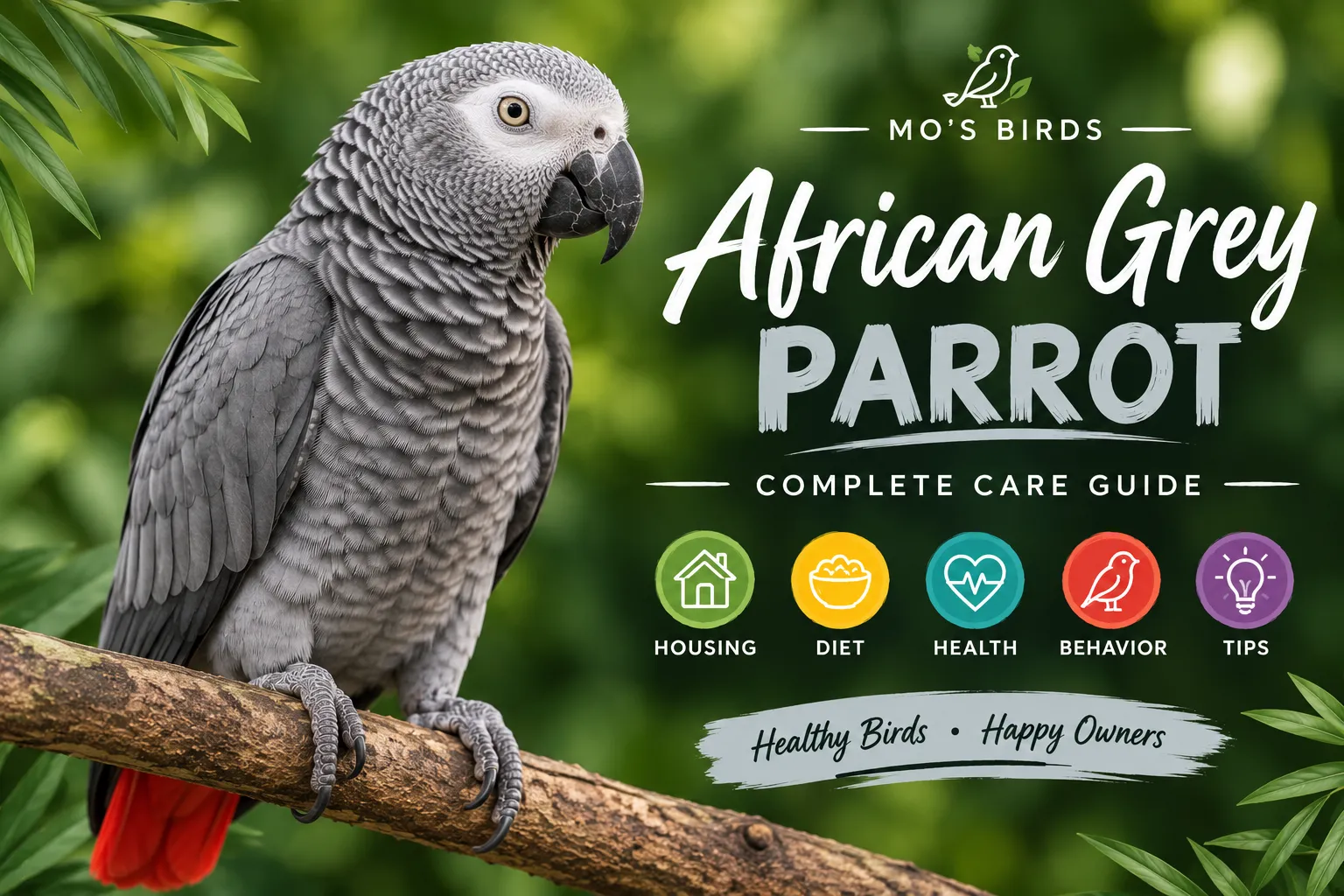
If you’re researching the African Grey Timneh parrot, you’re looking at one of the most underrated companion birds in the parrot world. Smaller, often bolder, and frequently quicker to talk than its Congo African Grey cousin, the Timneh is a serious contender for anyone who wants grey-parrot intelligence without the larger footprint.
This guide walks through what buying, owning, and caring for an African Grey Timneh parrot actually looks like, day to day and year to year.
What Makes the Timneh African Grey Different
The Timneh African Grey (Psittacus timneh) was reclassified as its own species from the Congo African Grey in 2012, after decades of being treated as a subspecies.
The two birds share the same sharp intelligence and mimicry skill, but an African Grey Timneh parrot is noticeably smaller, with darker charcoal-grey body plumage, a maroon (not bright red) tail, and a dark horn-colored upper beak with a black tip rather than the Congo’s solid black beak.
If you’re still deciding between the two types, our Timneh vs. Congo African Grey comparison guide breaks down the physical and temperament differences side by side. This guide picks up where that one leaves off, focusing purely on buying and caring for a Timneh.
Buying an African Grey Timneh Parrot: What to Expect
An African Grey Timneh parrot is genuinely uncommon in the pet trade. Timnehs make up only about 15 to 20 percent of African Greys sold in the United States, so expect a shorter list of breeders and possibly a waitlist. That scarcity is a feature, not a bug, for buyers who want a less commonly seen bird.
Reputable breeders sell Timnehs fully weaned, typically between 10 and 14 weeks old, with documentation covering hatch date, weaning status, and health testing. Before you commit to any African Grey Timneh parrot, confirm the following with the breeder:
-
DNA sexing results or the option to add DNA sexing before pickup
-
A disease panel covering PBFD, polyoma, psittacosis, and chlamydia
-
A written health guarantee, even if it only covers the first few days
-
Clear hand-raising and socialization history, not just “parent-raised”
-
Safe, trackable shipping if you’re buying outside your local area, such as Delta Cargo or USPS Priority Express with live-animal handling
Avoid any seller who can’t answer these questions directly, and be cautious of unusually cheap listings — a healthy, properly tested African Grey Timneh parrot is never the least expensive option on the page.
Timneh African Grey Price: What You’ll Actually Pay
Pricing for an African Grey Timneh parrot typically starts in the high $2,000s to low $3,000s for a hand-raised, DNA-tested baby from a specialized breeder, with rehomed adults sometimes available for less. That base price usually does not include optional add-ons, which are worth budgeting for separately.
| Item | Typical Add-On Cost | Why It Matters |
|---|---|---|
| Disease panel (PBFD, polyoma, psittacosis, chlamydia) | ~$75 | Confirms the bird is healthy before you bring it home |
| DNA sexing | ~$45 | Settles the bird’s sex instead of guessing |
| Starter kit (food, perch, toy bundle) | ~$60 | Covers the first week without a shopping trip |
| Cage and initial setup | $300–$800+ | A cage sized for a parrot this intelligent, not just this size |
Add in a first-year vet exam, a varied pellet-and-produce diet, and enrichment toys, and most new owners land somewhere between $3,500 and $4,500 in year one. You can browse current availability and exact current pricing on our Timneh African Grey listing.
Daily Care for Your Timneh African Grey
Once you bring an African Grey Timneh parrot home, daily care is where the relationship is really built. These birds are smart enough to get bored quickly, and a bored Timneh is far more likely to develop behavior problems than one whose days are structured around food, activity, and attention.
Diet and Nutrition
A formulated pellet should make up the bulk of the diet, supplemented daily with fresh vegetables, a smaller amount of fruit, and occasional healthy nuts like almonds or walnuts (never avocado, chocolate, caffeine, or anything salted). Fresh water should be changed daily, and food dishes washed to avoid bacterial buildup.
Cage, Enrichment, and Housing
Because an African Grey Timneh parrot is so mentally active, cage size matters more than its slightly smaller body would suggest. Aim for the largest cage your space allows, at minimum 24 by 24 by 36 inches, with multiple perch diameters and a rotating selection of foraging toys. Rotate toys weekly so the bird stays engaged instead of ignoring a static setup.
Sleep and Routine
African greys, Timnehs included, need 10 to 12 hours of uninterrupted, dark, quiet sleep per night to stay physically and behaviorally healthy. A covered cage in a low-traffic room, kept on a consistent schedule, prevents the irritability and feather-health issues that chronic sleep deprivation causes in this species.
Training and Talking Timeline for a Timneh African Grey
One of the most appealing traits of the African Grey Timneh parrot is how early it tends to start talking. Many Timnehs begin forming their first words between 6 and 9 months old, noticeably earlier than the typical Congo African Grey timeline, and can build vocabularies into the hundreds of words with consistent interaction.
-
Start with short, calm daily training sessions (5 to 10 minutes) focused on one word or behavior at a time
-
Pair words with consistent context, such as saying “up” every time you offer a hand for stepping up
-
Reward attempts, not just perfect mimicry, with a favorite treat or praise
-
Introduce basic trick training (wave, turn around) once step-up and recall are solid
-
Keep sessions positive and end before the bird loses interest, not after
Consistency matters more than session length. A Timneh that gets five focused minutes daily will out-progress one that gets an unpredictable hour once a week.
Preventing Stress Plucking and Behavior Issues
Compared to the Congo African Grey, the Timneh African Grey is generally considered less prone to stress plucking and anxiety-driven behavior, adapting to new environments and routine changes more readily. That reputation is earned, but it isn’t a guarantee — any African Grey Timneh parrot can develop plucking or screaming habits if its environment is understimulating or inconsistent.
Watch for early warning signs: increased feather chewing, sudden vocal escalation, or withdrawal from normal interaction. These usually trace back to boredom, an irregular schedule, or a change in the household the bird hasn’t adjusted to yet. Addressing the root cause early is far easier than reversing an established plucking habit later.
Timneh African Grey Lifespan and the Long-Term Commitment
An African Grey Timneh parrot is a genuine multi-decade commitment. With good care, Timnehs commonly live 40 to 55 years, which means a bird purchased today could easily outlive the household that raises it. That reality should factor into the decision as much as price or temperament does.
Before buying, it’s worth thinking through the practical side of that lifespan honestly:
-
Who will care for the bird if your living situation or health changes significantly
-
Whether your household can commit to decades of daily interaction, not just the first exciting year
-
Estate or long-term planning for a pet that may need a new home eventually
-
Ongooing costs for food, vet care, and enrichment across a multi-decade lifespan
Is an African Grey Timneh Parrot Right for You?
An African Grey Timneh parrot suits an owner who wants serious intelligence and talking ability in a slightly more compact, often more adaptable package than the Congo African Grey offers. It is not a beginner bird in the sense of being low-maintenance, but its temperament does tend to forgive first-time-owner mistakes more readily than many other large parrots.
According to the Wikipedia entry on the Timneh parrot, wild populations are native to the forests of Guinea-Bissau, Guinea, Sierra Leone, Liberia, and parts of the Ivory Coast, and the species is now CITES Appendix I protected due to wild population pressure — another reason captive-bred, DNA-tested, hand-raised birds matter so much when you’re buying.
Frequently Asked Questions
How big does an African Grey Timneh parrot get? Adults reach roughly 10 to 11 inches long and weigh a few hundred grams, noticeably smaller and lighter than the Congo African Grey.
Are Timneh African Greys good with children? With supervision and respectful handling, yes — but their decades-long lifespan and need for a calm, consistent household matter more than any single family member’s temperament.
Do Timneh African Greys talk better than Congo African Greys? Not necessarily better, but often earlier, with many Timnehs starting to mimic words by 6 to 9 months old.
How is an African Grey Timneh parrot shipped if I don’t live nearby? Reputable breeders use live-animal-certified carriers such as Delta Cargo or USPS Priority Express, with the bird weaned, health-checked, and old enough to travel safely before it ever leaves the breeder’s facility.
Picking Up vs. Shipping Your Timneh African Grey
If you’re within driving distance of a breeder, local pickup lets you see the exact African Grey Timneh parrot you’re bringing home, meet the breeder in person, and ask any last questions about diet, socialization history, or health records before you leave. It’s generally the lowest-stress option for both buyer and bird.
When pickup isn’t practical, nationwide shipping has become routine for hand-raised parrots, including the African Grey Timneh parrot, as long as the carrier is experienced with live-animal transport and the breeder provides tracking and a clear handoff plan on arrival day.
Ready to meet one in person? Our current African Grey Timneh parrot listing includes hand-raised, DNA-tested babies with disease panels available, shipped nationwide or available for local Southern California pickup.