Blue-Fronted Amazon Parrot: Complete 2026 Care Guide
Updated October 19, 2026
What Is a Blue-Fronted Amazon Parrot?
If you’re searching for a blue fronted amazon parrot for sale, here is what to know before you buy. The blue fronted amazon parrot (Amazona aestiva) is a medium-sized South American parrot named for the patch of turquoise-blue feathers just above its beak.
It is also called the turquoise-fronted Amazon, and it is one of the most popular Amazon parrots kept as a companion bird in the United States thanks to its intelligence, talking ability, and bold personality. Native to Bolivia, Brazil, Paraguay, and northern Argentina, this parrot lives in forests, savannas, and semi-arid woodlands, nesting in tree cavities and living in flocks in the wild. This natural history explains much of the care a blue fronted amazon parrot for sale needs in a home setting.
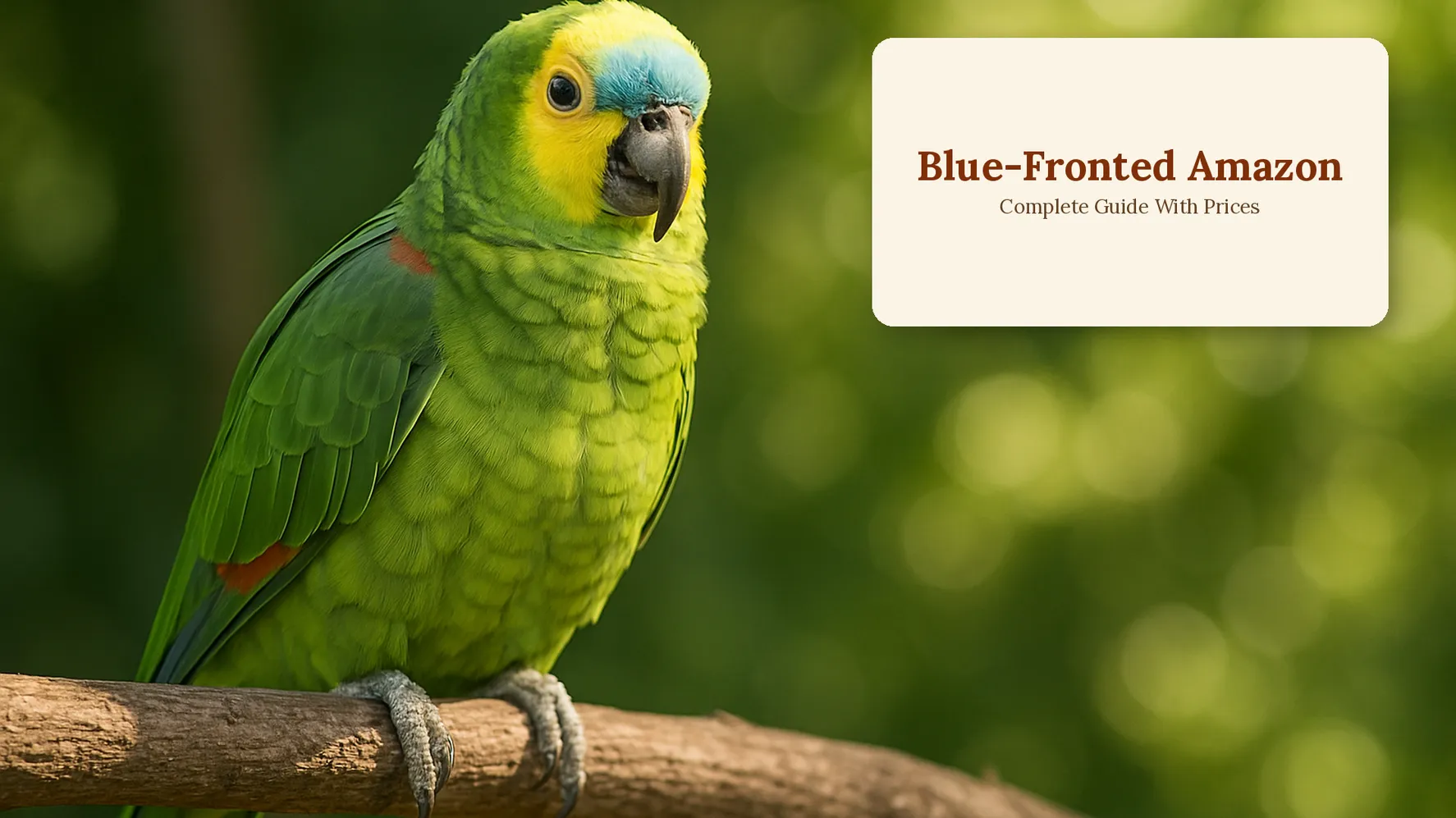
A blue fronted amazon parrot is mostly green, with a black beak (unlike most other Amazon species, which have horn-colored beaks), a blue forehead, and yellow feathers across the face and crown. The amount of blue and yellow varies quite a bit from bird to bird, which is part of what makes each one look a little different. These color variations are part of what makes each blue fronted amazon parrot for sale visually unique.
Depending on the subspecies, the “shoulder” patch at the leading edge of the wing can be red, yellow, or green. Adults reach about 15 inches long and are built stocky and solid compared to conures or smaller parrots. Buyers often ask about these markings when choosing a blue fronted amazon parrot for sale.
Blue-Fronted Amazon Price and What’s Included
Pricing for a hand-raised blue fronted amazon parrot for sale typically depends on age, weaning status, and health testing. At Morphnests, hand-raised, fully weaned blue-fronted Amazons are captive-bred in Southern California.
They come with the option to add a disease panel (PBFD, Polyoma, Psittacosis, and Chlamydia screening), DNA sexing, and a starter kit with food, a perch, and toys. Buying from a breeder who tests for disease and DNA-sexes the bird, rather than an unverified online classified ad, is one of the best ways to avoid costly surprises after you bring your new parrot home.
When comparing prices, ask every seller the same three questions: How old is the bird, and is it fully weaned? Has it been tested for common psittacine diseases? And what kind of post-purchase support does the breeder offer if you have questions in the first few weeks? Comparing these details across breeders is the best way to evaluate a blue fronted amazon parrot for sale fairly.
Size, Lifespan, and Physical Traits
| Trait | Details |
|---|---|
| Scientific name | Amazona aestiva |
| Length | About 15 inches (38 cm) |
| Lifespan | 30-50+ years with good care |
| Native range | Bolivia, Brazil, Paraguay, northern Argentina |
| Conservation status | CITES Appendix II; IUCN Near Threatened, with wild populations declining due to habitat loss and trapping |
| Beak color | Black (most other Amazons have horn-colored beaks) |
Because this parrot can live three decades or longer, bringing one home is closer to a lifelong commitment than a short-term pet decision. Prospective owners should think honestly about who will care for the bird in 10, 20, or 30 years. That long-term commitment is worth weighing carefully before bringing home a blue fronted amazon parrot for sale.
Temperament and Personality
This species is famous for being outgoing, playful, and more than a little comedic. They bond strongly with their family and are generally affectionate once settled in, but they are also intelligent birds that need daily mental stimulation. A bored Amazon parrot can become loud, destructive, or prone to feather plucking, so enrichment is not optional.
Like most Amazon species, they can go through hormonal periods, usually tied to seasonal changes, during which males in particular may become more territorial or nippy. Recognizing these phases and giving the bird space, rather than punishing the behavior, usually helps it pass without lasting issues. Understanding this behavior in advance helps new owners of a blue fronted amazon parrot for sale handle it calmly.
Talking Ability and Noise Level
This species ranks among the more talkative Amazon parrots, with many individuals learning a working vocabulary of 20 to 50 words or more, plus whistles and song. Talking ability varies by individual and by how much time an owner spends talking and interacting with the bird daily. On the flip side, they are also capable of loud contact calls and shrieks, especially at dawn and dusk, so apartment living with thin walls is worth thinking through before buying one. This talking ability is one of the biggest draws for anyone considering a blue fronted amazon parrot for sale.
Diet and Nutrition
A healthy diet for this species should be built around a high-quality commercial pellet, supplemented with a wide variety of fresh vegetables and fruit. Leafy greens, bell peppers, carrots, squash, and berries are all good staples. Nuts and seeds are fine as occasional treats but should be limited, since Amazon parrots are prone to obesity and fatty liver issues if their diet is too rich.
Avoid avocado, chocolate, caffeine, onions, and salty or sugary human food entirely. A breeder selling a blue fronted amazon parrot for sale should be able to tell you exactly what the bird has been eating and for how long. Sticking to a safe, balanced diet keeps a blue fronted amazon parrot for sale healthy for decades.
Cage, Toys, and Enrichment
-
Minimum cage size of roughly 24 x 24 x 36 inches, larger if possible, with bar spacing no wider than 1 inch.
-
Several perches of varying diameter and texture to keep feet healthy.
-
Foraging toys, chewable wood toys, and puzzle feeders to prevent boredom-driven behavior problems.
-
Daily supervised time outside the cage for exercise and social interaction.
-
A consistent sleep schedule (10-12 hours of darkness and quiet) to help regulate hormones and mood.
Early, consistent training pays off for the life of the bird. Short, positive-reinforcement sessions — a few minutes at a time, several times a day — build trust faster than long sessions, and they give an intelligent parrot a constructive outlet instead of letting it invent its own entertainment through chewing furniture or screaming for attention. Target-training, step-up cues, and simple word association are good starting points for a newly homed bird of any age.
Health and Common Concerns
With good nutrition, exercise, and regular avian vet checkups, this parrot can live an exceptionally long life. The most common health issues breeders and vets see in the species are obesity, feather plucking from boredom or stress, respiratory irritation from aerosols or scented candles, and atherosclerosis linked to high-fat diets. Consistent care like this is what allows a well-kept blue fronted amazon parrot for sale to thrive for 50+ years.
A reputable breeder should be able to tell you what disease testing, if any, was done on the parent birds and the chick before sale. This is one more reason to vet any blue fronted amazon parrot for sale carefully before committing.
Is a Blue-Fronted Amazon Right for You?
This is a great species for an owner who wants an interactive, talkative bird and has the time to provide daily enrichment, training, and social interaction for decades to come. It is a more demanding choice for anyone who needs a quiet apartment bird, travels frequently, or wants a low-maintenance pet. That personality fit is exactly why so many families search for a blue fronted amazon parrot for sale each year.
First-time parrot owners who do their research and commit to consistent training tend to do very well with this species, since Amazons respond strongly to positive reinforcement. If that sounds like you, a blue fronted amazon parrot for sale from a reputable, hands-on breeder is worth serious consideration.
Compared with other Amazon species sometimes offered as pets, such as the double yellow-headed Amazon or the yellow-naped Amazon, the blue-fronted Amazon is generally considered a bit more laid-back day to day, though individual personality varies more than species alone. All Amazon parrots share the same core needs: a varied diet, a large cage, daily enrichment, and an owner willing to commit for the long haul.
Where to Buy a Blue-Fronted Amazon Parrot
If you’ve decided a blue fronted amazon parrot for sale is the right fit, buy from a breeder who can show you the parent birds, offers DNA sexing and disease testing, and provides support after the sale.
Morphnests hand-raises blue-fronted Amazons in Southern California and ships nationwide via Delta Cargo — see the current blue-fronted Amazon listing for availability, pricing, and add-on options. For background on the species’ wild status, the Blue-fronted Amazon entry on Wikipedia covers its CITES Appendix II listing and native range in more detail.
Frequently Asked Questions
How much does a blue-fronted Amazon parrot cost? Prices vary by breeder, age, and health testing included, but hand-raised, fully weaned birds from a reputable breeder commonly range from roughly $1,800 to $2,500, with optional add-ons like DNA sexing and disease panels priced separately. Add-on costs aside, that range is a fair benchmark for a blue fronted amazon parrot for sale from any established breeder.
Are blue-fronted Amazons good for beginners? Yes, with realistic expectations. They are intelligent and trainable, but they need daily attention, enrichment, and patience through hormonal periods, so they suit a first-time owner who has researched the species and has time to invest.
How long do blue-fronted Amazon parrots live? With good nutrition and veterinary care, 30 to 50 years or more is realistic, which is an important factor to plan around before buying one.