Blue Quaker Parrot For Sale: Best 2026 Buying Guide
Updated October 27, 2026
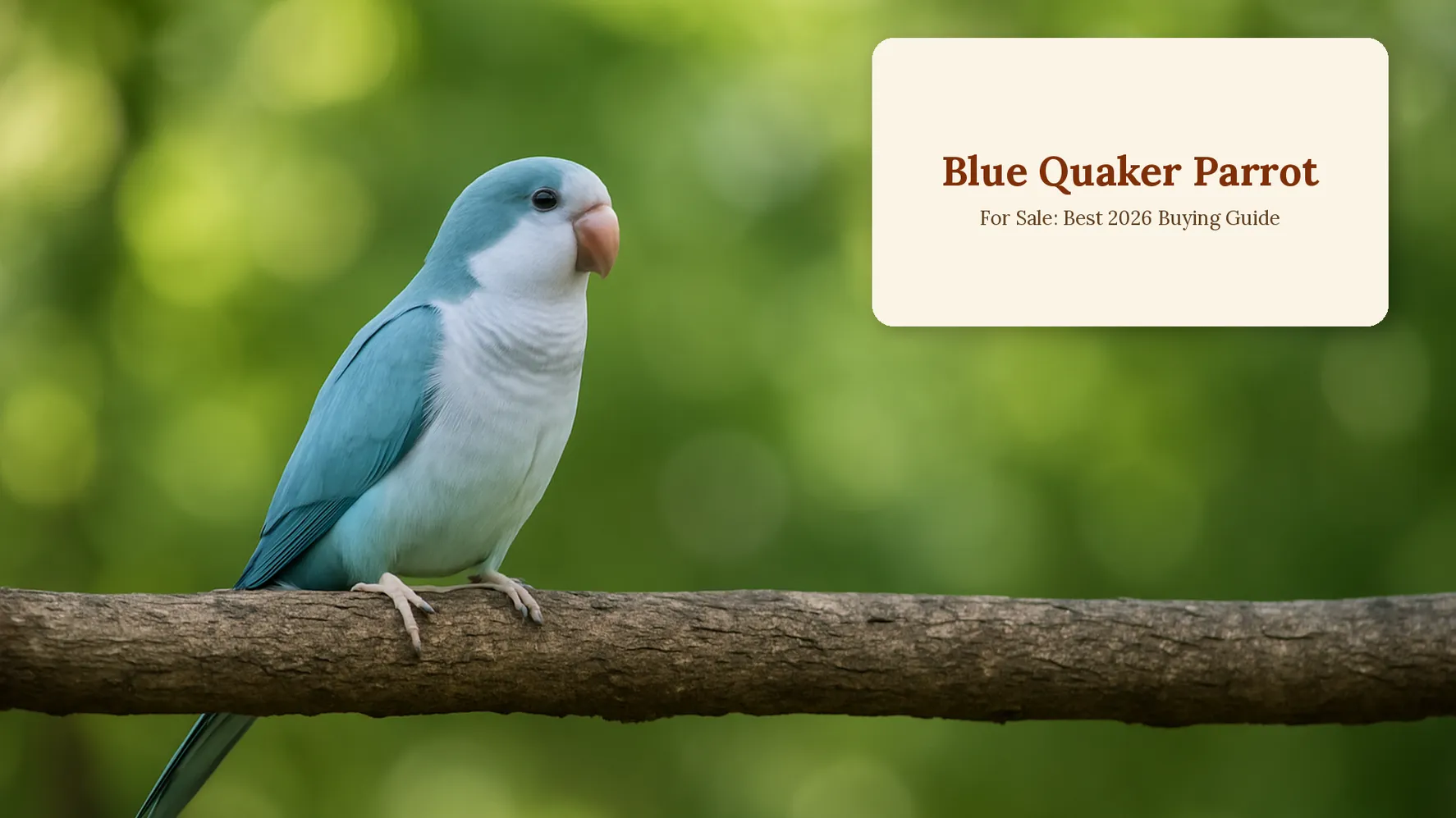
If you’ve fallen for the quaker parrot’s charm and intelligence but want something rarer than the classic green bird, a blue quaker parrot for sale is one of the most strikingly different color mutations you can bring home. Powder-blue feathers replace the familiar green, and a clean white face replaces the usual grey bib, giving this small parrot a cool, almost frosted look.
Table of Contents
Before you commit, here’s what actually matters: accurate markings, realistic pricing, legality in your state, and the day-to-day care a Blue Quaker needs to thrive for the next two to three decades. We’ll also cover exactly where this mutation fits among the other quaker parrot color varieties, so you know what you’re paying for.
What Is a Blue Quaker Parrot?
The Blue Quaker Parrot is not a separate species. It is a color mutation of the Quaker Parrot (Myiopsitta monachus), also called the Monk Parakeet, a medium-small parrot native to South America. Breeders selectively paired birds carrying a recessive blue gene to remove the yellow pigment that normally mixes with blue structural coloring to produce green. The result is a bird with every behavioral trait of a standard Quaker, just wearing a completely different coat.
Because the blue gene is recessive and less common in breeding populations, a genuine blue quaker parrot for sale is harder to find and typically costs more than a green normal, which is exactly why shoppers searching for one should know what to expect before contacting a breeder. It also means patience matters: a reputable aviary may have a waitlist rather than a bird ready to ship the same week.
Blue Quaker Parrot Appearance and Markings
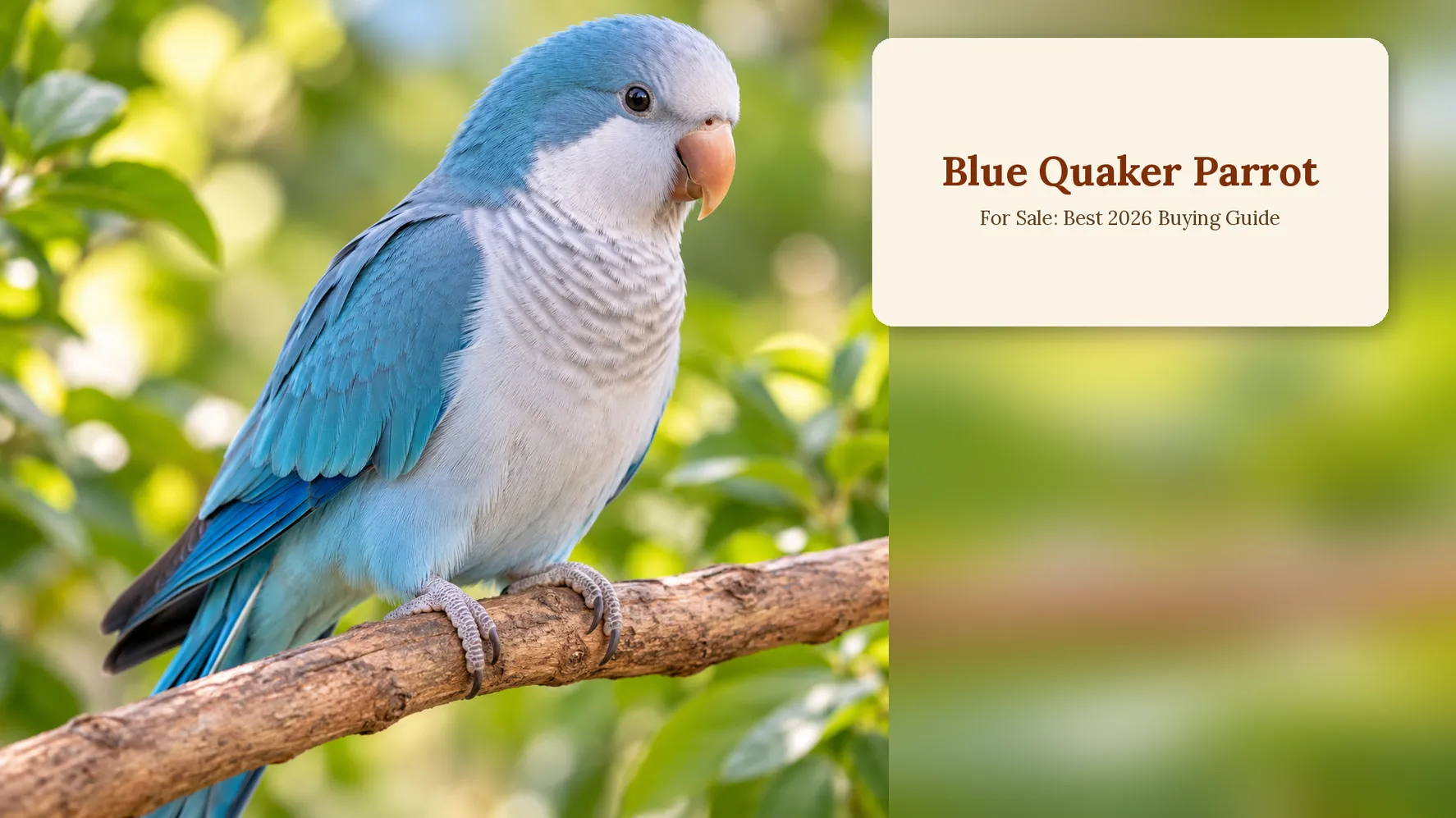
A correctly colored Blue Quaker should show soft powder-blue plumage across the back, wings, and long tail, replacing the normal bright green entirely. The face, throat, and chest are a clean white, replacing the pale grey “bib” seen on a standard green Quaker.
The beak is horn-colored, a pale pinkish-grey, and the eyes are dark brown. There should be no green feathering anywhere on a true blue mutation, and the grey of a normal bird’s face is swapped for white rather than staying grey. Any seller listing a blue quaker parrot for sale should be able to show clear, well-lit photos confirming these markings before you commit to a deposit.
Size-wise, a Blue Quaker measures about 11 to 13 inches from head to tail tip and weighs roughly 90 to 120 grams, in line with every other Quaker Parrot color mutation. If a bird advertised as a blue quaker parrot for sale shows patchy green feathers or a grey face instead of white, it may be a different mutation (such as pied or cinnamon) or simply not a clean example of the blue line.
Blue Quaker Parrot For Sale: Price and What Affects Cost
Color mutations command a premium over the green normal Quaker Parrot, and blue is one of the more established, widely available mutations. Expect a healthy, hand-raised blue quaker parrot for sale to run higher than a green bird of the same age, with the exact number shaped by a handful of factors.
| Cost Factor | Typical Impact on Price |
|---|---|
| Color mutation | Blue runs higher than green normal; rarer mutations like lutino or pied run higher still |
| DNA sexing | Adds a modest fee but removes the guesswork since Quakers aren’t visually sexable |
| Disease testing | A clean panel (PBFD, Polyoma, Psittacosis, Chlamydia) adds cost but protects your investment |
| Breeder reputation | Hand-raised, well-socialized birds from an established aviary cost more than pet-store stock |
| Region and shipping | Nationwide delivery via Delta Cargo or USPS adds a shipping fee on top of the bird’s price |
Budget for ongoing costs too. Most owners spend roughly $50 to $90 a month on quality pellets, fresh vegetables, toy replacement, and a vet fund contribution, regardless of which color mutation they chose.
Personality and Talking Ability
Blue Quakers inherit the full Quaker Parrot personality package: bold, confident, playful, and more than a little stubborn. They bond intensely with one primary person but generally tolerate the rest of the household better than many small parrots. Once a Quaker decides a behavior works in its favor, patience is the only way to retrain it.
Prospective owners sometimes assume an unusual color mutation comes with a gentler or quieter temperament. It doesn’t. Anyone shopping for a blue quaker parrot for sale should plan on the same bold, opinionated personality as any other Quaker, just wrapped in different feathers.
They are also excellent talkers for their size, often building vocabularies of 30 to 60 words and occasionally more, usually spoken clearly and in context. A Blue Quaker’s voice and trainability are identical to the green normal’s; only the feather color differs.
Care Requirements for a Blue Quaker Parrot
A Blue Quaker needs a sturdy cage at least 24 by 24 by 30 inches with bar spacing no wider than 5/8 inch, since Quakers are heavy, persistent chewers. Feed roughly 60 to 70 percent quality pellet, 20 to 30 percent fresh vegetables, and 5 to 10 percent seeds and treats. These requirements are identical for every Quaker color mutation, so don’t expect a blue quaker parrot for sale to need less setup than a green one.
Plan on at least three hours of supervised out-of-cage time daily in a bird-proofed room, plus rotating chew and foraging toys weekly. Quakers are natural nest builders, even in captivity, so offering plenty of safe shreddable material heads off the urge to shred cage covers and furniture instead. Ten to twelve hours of dark, quiet sleep each night keeps a Blue Quaker’s mood and feather condition stable.
Is a Blue Quaker Parrot Legal Where You Live?
Legality is the single most important question to settle before buying, and it applies to every color mutation equally, blue included. Because escaped or released Quaker Parrots have established feral colonies in several warm US states, a number of jurisdictions restrict or ban ownership outright to protect agriculture and native bird populations.
Some states prohibit Quaker ownership entirely, others require a permit or registration, and most states allow them without any special paperwork. Rules change and vary by county, so always confirm current law with your state’s fish and wildlife agency or an avian vet before purchasing. For the complete, regularly checked state-by-state breakdown, see our full Quaker Parrot guide.
Blue Quaker vs. Standard Green Quaker Parrot
Aside from color, the two are the same bird in every meaningful way:
-
Plumage: powder-blue body, wings, and tail versus bright green upperparts
-
Face and chest: clean white versus pale grey
-
Size and weight: identical, 11 to 13 inches and 90 to 120 grams
-
Lifespan: identical, 20 to 30 years, occasionally reaching 35
-
Personality, noise level, and talking ability: identical across every mutation
-
Price: blue typically costs more due to lower supply relative to demand
In short, choosing blue over green is purely an aesthetic decision, not a behavioral or care one.
Buying Checklist Before You Choose a Blue Quaker Parrot For Sale
Work through these steps in order before putting down a deposit:
-
Confirm Quaker Parrots are legal to own in your state and, where relevant, your county
-
Verify the breeder hand-raises and weans birds rather than reselling pet-store stock
-
Ask whether DNA sexing and a disease panel (PBFD, Polyoma, Psittacosis, Chlamydia) are available as add-ons
-
Look closely at photos for clean white face and chest feathering with no patchy green, confirming a true blue mutation
-
Ask about the health guarantee and what happens if the bird arrives unwell after shipping
-
Set up the cage, toys, and pellet-based diet before the bird comes home, not after
Frequently Asked Questions
Is a blue quaker parrot the same species as a green quaker parrot?
Yes. Blue is a color mutation of the same species, Myiopsitta monachus, not a different bird.
How much does a blue quaker parrot for sale typically cost?
Blue mutations generally run higher than a green normal Quaker, with the final price shaped by DNA sexing, disease testing, and breeder reputation.
Are blue quaker parrots good for beginners?
They suit beginners who want a confident, talkative bird and can commit to consistent training, but their stubborn streak and chewing habits reward some prior parrot experience.
Do blue quaker parrots talk as well as green ones?
Yes. Color mutation has no effect on talking ability, voice clarity, or vocabulary size; those traits are consistent across the species.
Where can I find a reputable breeder with a blue quaker parrot for sale?
Look for a hand-raising aviary that offers DNA sexing, a disease guarantee, and nationwide shipping, and ask to see recent photos of the specific bird before paying a deposit.
Will a blue quaker parrot’s color fade or change as it ages?
No. Unlike some juvenile plumage changes seen in other parrot species, a Quaker’s blue coloring is stable from the time its adult feathers come in and stays that way for life.
For more on this species beyond the blue mutation, including legality, personality, and full cost breakdowns, read our complete Quaker Parrot guide. For background on the wild species’ natural range and colony-nesting behavior, see the Wikipedia entry on the Monk Parakeet.