Green Cheek Conure Cost: Complete Price and Care Guide
Updated November 7, 2026
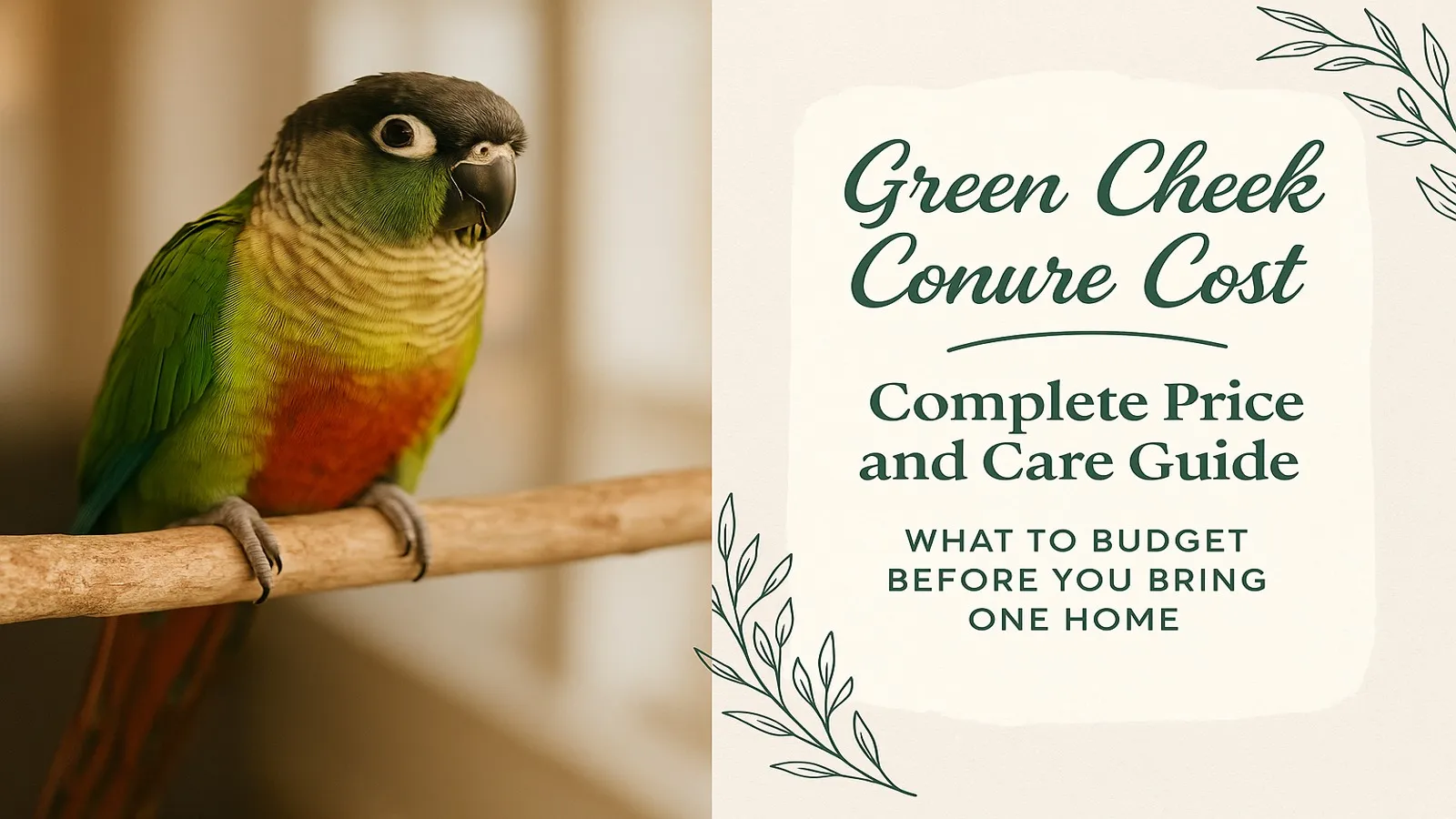
Green cheek conures are one of the most popular small parrots in the country, and also one of the most misunderstood when it comes to cost. The price of the bird is only the first line of the budget. This guide covers what drives the green cheek conure price, how color mutations change it, what a proper setup costs, what to expect for yearly care, and how to tell a fair offer from a bargain that will cost you more later.
How Much Does a Green Cheek Conure Cost?
The price of a green cheek conure depends on a handful of factors rather than one fixed number. Two birds that look alike in a photo can be priced very differently because of how they were raised, who bred them, and what comes with them.
The main factors are:
-
Color mutation. Normal (wild-type) green cheeks are generally the most affordable. Rarer or more complex mutations cost more.
-
How the bird was raised. A hand-raised, hand-fed chick that is fully weaned and socialized is worth more than a parent-raised bird with little human contact.
-
Age and weaning status. Fully weaned babies are the safest purchase. Unweaned birds need experienced feeding and should not go home with a first-time owner.
-
Breeder reputation and health practices. Reputable breeders invest in clean facilities, good nutrition, and health checks. That shows up in the price, and it’s money well spent.
-
Included extras. Some sales include a health guarantee, leg band or DNA information, or starter guidance. Others include nothing.
-
Shipping or pickup. If you’re buying from a breeder in another state, safe live-bird shipping is a real cost to factor in.
For current availability and pricing, check the live listings on our green cheek conures for sale page rather than relying on an outdated number from a blog post or forum thread.
Green Cheek Conure Color Mutations and Price
The wild-type green cheek is green with a maroon belly patch, a gray-brown head cap, and a red-maroon tail. Breeders have developed many mutations, and each one affects availability and price.
| Mutation | What it looks like | Relative price level |
|---|---|---|
| Normal (wild-type) | Green body, maroon tail and belly | Lowest |
| Yellow-sided | More yellow on the sides and chest, with a lighter green body | Moderate |
| Turquoise | Blue-teal body in place of green | Moderate to higher |
| Cinnamon | Softer, warmer tones with a brownish wash | Moderate |
| Pineapple | Yellow-sided plus cinnamon, giving a bright orange and yellow look | Moderate to higher |
| Turquoise combinations | Blue-based birds carrying other mutations | Higher |
| Rare or newer combinations | Unusual color blends from selective breeding | Highest |
A quick note on genetics: yellow-sided and turquoise are recessive traits, and cinnamon is sex-linked. That means a bird’s appearance does not always tell you what it carries. Reputable breeders can explain a chick’s parentage and what it may pass on if you ever plan to breed.
If you want a pet and not a breeding project, color should be the last thing you pay a premium for. Temperament and health are the same across mutations. A normal green cheek is every bit as sweet as a rare one.
Why Hand-Raised Birds Are Worth the Price
A lower price on a parent-raised or poorly socialized bird often means more work and more frustration for you. Hand-raised green cheeks tend to be:
-
Comfortable being handled and stepping up
-
Less likely to bite out of fear
-
Easier to bond with, especially for first-time bird owners
-
Used to normal household sounds and activity
A hand-raised bird still needs daily interaction after it comes home, but you start from a much better place. For most families the added cost of a well-socialized bird pays for itself in a smoother first year.
One-Time Setup Costs
The bird is only part of what you’ll spend up front. Here’s what a proper starter setup includes.
| Item | What to look for | Cost level |
|---|---|---|
| Cage | Roughly 24″ x 24″ minimum footprint for one bird, with bar spacing of about 5/8″ or less | Moderate to high |
| Perches | A mix of sizes and textures (natural wood, rope) | Low |
| Food and water dishes | Stainless steel or ceramic, easy to clean | Low |
| Toys | Shreddable, foraging, and chewable toys to start with | Low to moderate |
| Travel carrier | For vet visits and emergencies | Low to moderate |
| Play stand or gym | Gives the bird a place to be out of the cage | Low to moderate |
| Initial avian vet visit | A wellness check soon after bringing the bird home | Moderate |
Buy the largest cage you can reasonably fit. Green cheeks are active and playful, and a cramped cage leads to boredom, noise, and bad habits. A cage that’s too small is the most common setup mistake we see, and it’s one you end up paying for twice when you upgrade.
Ongoing Yearly Costs
This is where the true green cheek conure cost shows up. With a lifespan commonly cited at 20 to 30 years with good care, a small monthly expense adds up over time.
-
Food. A quality pellet base, plus fresh vegetables and a modest amount of seed or nuts as treats. Fresh food is a recurring but small cost.
-
Toys. Conures destroy toys. Plan to replace them regularly. Rotating toys keeps your bird engaged and is cheaper than buying new ones constantly if you make your own from safe materials.
-
Cage supplies. Liners or paper, cleaning products, and replacement perches as they wear down.
-
Veterinary care. An annual wellness visit with an avian vet is a good habit. Exotic vets generally cost more than a standard dog-and-cat practice.
-
Emergency fund. Birds hide illness well, and an unexpected vet visit can be significant. Setting money aside in advance is much easier than finding it in a crisis.
-
Boarding or pet sitter. If you travel, you’ll need someone who knows how to care for a bird.
A general rule: budget for the bird’s food, toys, and supplies as a steady monthly line item, and keep a separate reserve for medical needs. Ask an avian vet in your area for a realistic estimate of local exam costs.
Green Cheek Conure vs. Other Small Parrots: Cost and Care
Wondering how the green cheek compares to other popular small parrots? Here’s a quick side-by-side.
| Trait | Green Cheek Conure | Sun Conure | Lovebird |
|---|---|---|---|
| Adult size | About 10 inches | About 12 inches | About 6 inches |
| Noise level | Moderate; quieter than most conures | Loud, with piercing calls | Moderate, chirpy |
| Cuddliness | High | High | Variable |
| Typical lifespan | 20-30 years | 25-30 years | 10-20 years |
| Relative purchase price | Moderate | Moderate to higher | Lower to moderate |
| Good for apartments | Often yes | Often no | Often yes |
If you’re still comparing, our sun conure cost guide and lovebird price guide break down what those birds cost in the same way. For more side-by-side comparisons, browse our species guides.
Is a Green Cheek Conure the Right Pet for You?
Green cheeks are playful, affectionate, and clownish, and they are often described as the best “starter” conure. They are also long-term companions that need daily attention. Before you buy, be honest about:
-
Time. They need several hours of out-of-cage interaction every day. A lonely conure gets loud and destructive.
-
Noise. They’re quieter than sun conures or cockatoos, but they are not silent. Expect contact calls, especially in the morning and evening.
-
Mess. Seed hulls, shredded toys, and droppings are part of daily life.
-
Commitment. Twenty-plus years is a long time. Think about how a bird fits into your life in 5, 10, and 20 years.
-
Household safety. Nonstick cookware, scented candles, aerosol sprays, and other fumes can be dangerous to birds. Ceiling fans and open windows are hazards too.
How to Avoid a Bad Deal
A suspiciously cheap price is a warning sign. Watch for these red flags:
-
The seller won’t let you see the bird, ask questions, or share parent information.
-
The bird is unweaned or the seller is vague about its age.
-
No health guarantee or no explanation of how the bird was raised.
-
Birds housed in dirty or overcrowded conditions.
-
Pressure to pay quickly or rule out a vet check.
A reputable breeder wants you to ask questions. Take your time, and when possible, schedule a wellness exam with an avian vet shortly after the bird arrives.
Where to Find a Green Cheek Conure at Morphnests
At Morphnests, our green cheek conures are hand-raised in Southern California and fully socialized before they go home. We ship nationwide, so you don’t have to live nearby to bring one home. You can see what’s currently available, including different color mutations, on our green cheek conures for sale page. If you’re weighing a few species, our species guides are a good place to continue your research.
If you have questions about a specific bird’s age, weaning status, or color, reach out before you buy. We’d rather you feel confident in the decision than rushed.
Frequently asked questions
How much does a green cheek conure cost?
It depends mainly on the color mutation, whether the bird is hand-raised and weaned, and the breeder. Normal green cheeks are generally the most affordable and rarer mutations cost more. Check current listings for exact pricing, and budget for the cage, supplies, and vet care on top of the bird.
Why do some green cheek conures cost more than others?
Color mutation is the biggest factor. Pineapple, turquoise, and rare combination birds cost more than normal green cheeks because they’re harder to produce. Hand-raising, health practices, and any guarantee included also affect the price.
What are the ongoing costs of owning a green cheek conure?
Expect regular spending on pellets and fresh food, replacement toys, cage supplies, and an annual avian vet visit. It’s also wise to keep an emergency fund for unexpected medical care, since birds often hide illness until it’s advanced.
How long do green cheek conures live?
With good diet, vet care, and a safe home, green cheek conures are commonly cited as living 20 to 30 years. That’s a long-term commitment, so it should factor into your decision as much as the purchase price.
Are green cheek conures good for beginners?
Yes, they’re often recommended as a first parrot because they’re affectionate, playful, and quieter than many other conures. A hand-raised bird makes the first year easier, though they still need daily interaction and consistent training.
Can I buy a green cheek conure online and have it shipped?
Yes, from a reputable breeder who handles live-bird shipping safely. Morphnests ships nationwide. Ask about the bird’s age, weaning status, and health guarantee before you buy.
Ready to bring home a Green Cheek Conure? See our current Green Cheek Conure for sale at Morphnests — hand-raised, DNA-sexed, and health-tested.
Green cheek conure prices at Morphnests
On November 7, 2026, the standard green cheek and pineapple were both listed at $274.99, and the turquoise cinnamon was listed at $329.99. All three showed sold out when checked. These were listed bird prices. DNA sexing and an individual disease panel were shown as optional add-ons, and delivery requires a separate quote.