How to Bond With a New Parrot: Best 2026 Guide
Updated November 1, 2026
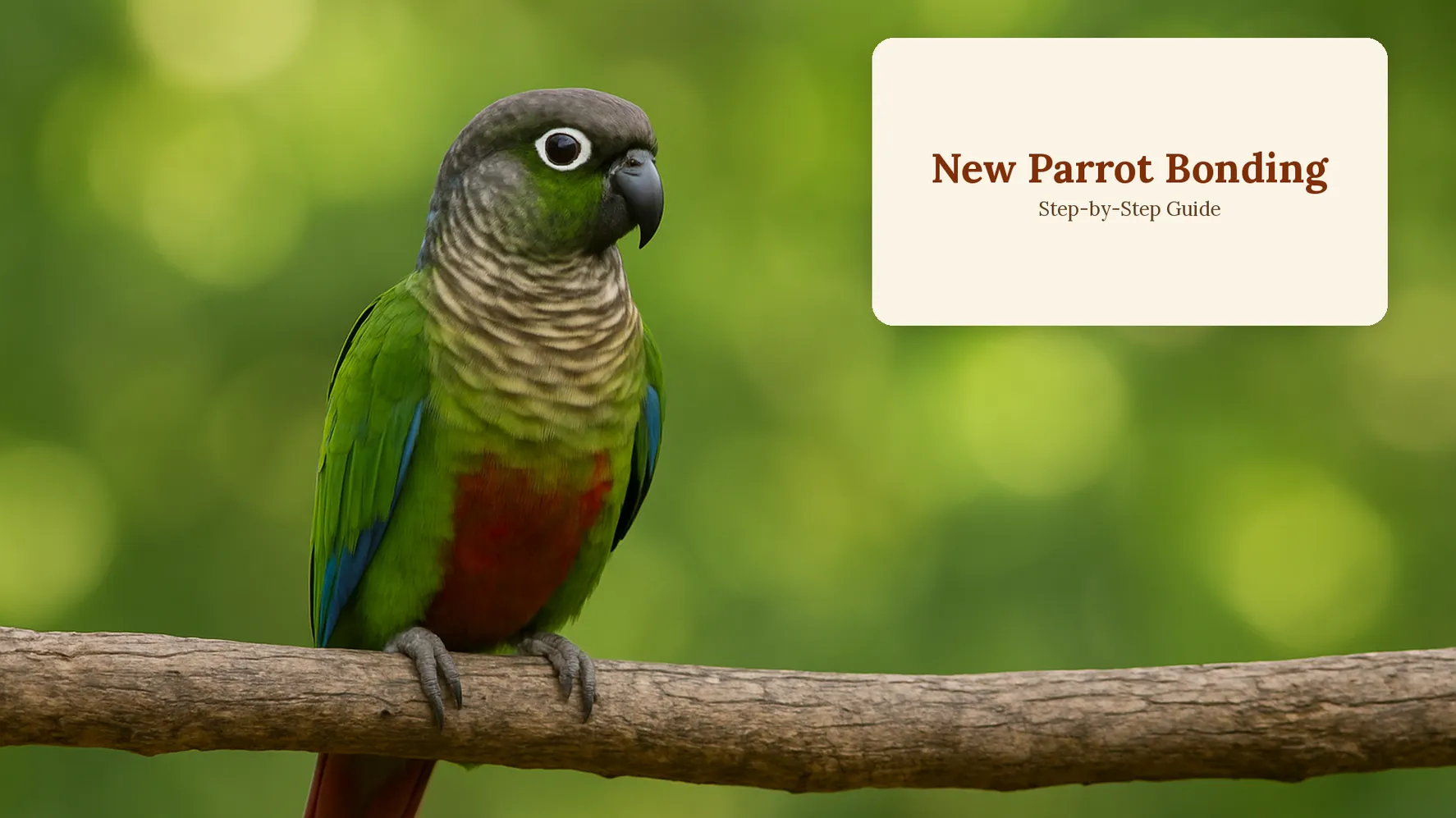
Learning how to bond with a new parrot is the single most important thing you can do in your bird’s first weeks at home. Parrots are not domesticated the way dogs and cats are — every bird, whether a tiny parrotlet or a full-size macaw, has to individually decide that you are safe to be around.
Table of Contents
This guide walks through a realistic, week-by-week approach to building that trust, plus the daily habits that keep the bond strong for life and the common mistakes that quietly slow the process down.
Why It Takes Time to Bond With a New Parrot
A parrot arriving in a new home has just lost everything familiar — its flock, its cage setup, its routine, and often its primary caretaker. Even a confident, well-socialized hand-raised bird needs time to recalibrate. Rushing physical contact before a bird feels safe is the single most common mistake new owners make, and it can set the relationship back by weeks or months.
Bonding is not a single event; it’s a long series of small, consistent signals that tell the bird you are predictable, calm, and not a threat. Most birds begin to visibly relax within the first one to two weeks, though full trust can take several months depending on the species and the individual bird’s history.
A Week-by-Week Approach to Bond With a New Parrot
-
Days 1-3 — Settling in: Keep the cage in a calm, low-traffic room. Talk softly nearby without reaching in. Let the bird eat, drink, and explore its space without pressure.
-
Days 4-7 — Quiet presence: Sit near the cage daily during calm moments — reading or working nearby is ideal. The goal is for your presence to become background noise rather than a trigger.
-
Week 2 — Hand association: Begin offering a favorite treat through the cage bars, then from an open palm at the cage door. Never force the bird to step up; let it approach on its own terms.
-
Weeks 3-4 — Step-up training: Once the bird reliably takes treats from your hand, introduce the “step up” cue using a finger or small perch, rewarding every attempt with praise and a treat.
-
Month 2 and beyond: Expand to short supervised out-of-cage time, simple training games, and gradually longer handling sessions as the bird’s confidence grows.
Daily Habits That Build Trust
Beyond the initial settling-in period, a handful of daily habits do most of the work of keeping a bond strong over the long run:
-
Consistent daily interaction at the same general times each day, so the bird can predict your routine.
-
Positive reinforcement only — reward calm, confident behavior with treats and praise; never punish fear or biting, which only teaches the bird to associate you with stress.
-
Reading body language before approaching: relaxed feathers and a loose stance mean “go ahead,” while pinned eyes, flared tail feathers, or a crouched posture mean “give me space.”
-
Talking to your bird throughout the day, even during unrelated tasks, so your voice becomes a familiar, reassuring sound rather than something only associated with handling.
-
Offering choices — letting the bird choose which hand to step onto, or whether to come out of the cage at all, builds a sense of control that speeds up trust.
Common Bonding Mistakes to Avoid
Even well-meaning new owners can slow down the bonding process without realizing it. Watch for these common missteps:
-
Reaching into the cage too soon, before the bird has had time to settle into its new environment.
-
Chasing a loose bird around a room to catch it, which teaches the bird that hands mean danger.
-
Forcing step-up training before the bird trusts your hand near its body.
-
Inconsistent handling — being gentle one day and impatient the next confuses the bird and slows trust-building.
-
Skipping cage-side time and going straight to out-of-cage handling, which skips a crucial trust-building stage.
Bonding Differences by Species
While the core approach above works across species, bonding timelines vary noticeably by bird. The table below gives a rough sense of what to expect:
| Species | Typical Bonding Timeline | Notes |
|---|---|---|
| Budgie / Parrotlet | 2-6 weeks | Small size makes early trust-building faster, but startles easily |
| Cockatiel | 2-4 weeks | Generally quick to bond; benefits from daily whistling/talking |
| Conure | 3-8 weeks | Energetic and social; responds well to treat-based training |
| African Grey | 1-3 months | Cautious by nature; rewards patience with a deep, lasting bond |
| Macaw / Amazon | 1-4 months | Large personality; consistent daily routine matters most |
Setting Up a Bonding-Friendly Environment
The physical setup of your bird’s space has a direct effect on how quickly it bonds with you. Before your parrot comes home, review our guide on preparing your home for a new baby parrot to make sure the cage placement, lighting, and household routine are already set up to support a calm transition.
According to the RSPCA’s guidance on bird behavior and welfare, a stable, enriching environment is one of the strongest predictors of a well-adjusted, trusting companion bird.
Once your bird is comfortable stepping up and handling short sessions, structured training builds on that foundation significantly. Our article on tips for training session success covers how to turn early trust into reliable, positive behaviors.
Signs Your Bond Is Growing
Progress with a new parrot is often gradual, so it helps to know what early wins look like:
-
The bird no longer flies or climbs away when you approach the cage.
-
It takes treats directly from your fingers without hesitation.
-
It vocalizes or moves toward you when you enter the room.
-
It allows head scratches or steps up willingly, without coaxing.
-
It relaxes — fluffing feathers briefly, tucking a foot up, or preening calmly — while you’re nearby.
Troubleshooting a Slow or Stalled Bond
Not every bird follows the timeline above neatly, and that’s normal. If progress seems to have stalled, work through these common causes before assuming something is wrong:
-
Too much pressure, too soon: Scale back to cage-side presence and treat offering for a week before trying hands-on contact again.
-
Inconsistent schedule: Birds bond fastest with predictable routines; irregular interaction times can stall even a previously good start.
-
Unresolved fear triggers: Sudden noises, new household members, or a recent scare near the cage can reset progress — identify and remove the trigger before continuing.
-
Health issues: A bird that suddenly becomes withdrawn or aggressive may be unwell rather than simply slow to bond; rule out illness with an avian vet if the change is sudden.
-
Prior negative experiences: Rehomed or previously mishandled birds often need a longer, gentler timeline — patience matters more than speed here.
If you work through this list and you’re still struggling to bond with a new parrot after a month or two, it’s worth consulting an avian behaviorist or your breeder for guidance specific to your bird’s history and species.
Bonding With Multiple Birds in the Household
If you already have a parrot and are bonding with a new one, give each bird its own dedicated one-on-one time rather than handling them only together. Birds can become possessive or anxious if interaction always happens as a group, which can slow down the newer bird’s individual bond with you.
Keep the two birds’ cages a reasonable distance apart at first, and introduce supervised, side-by-side time only once the new bird is comfortable with you individually. Rushing bird-to-bird introductions before either bird trusts you can create tension that affects both relationships.
Frequently Asked Questions
How long does it typically take to bond with a new parrot? Most people who set out to bond with a new parrot see early signs of trust within one to two weeks, though a deeper, reliable bond can take one to four months depending on the species and the individual bird’s background.
What is the fastest way to bond with a new parrot? There is no shortcut, but consistency speeds things up more than anything else: calm daily presence, treat-based hand association, and letting the bird set the pace at every stage.
Should I handle my new parrot immediately after bringing it home? No. Give the bird several days to settle into its new environment before attempting any hands-on contact — early pressure is one of the most common reasons bonding gets off to a rocky start.
Can an older or rehomed parrot still bond with a new owner? Yes. It may take longer and require extra patience, especially if the bird had a negative prior experience, but most parrots are capable of forming new, strong bonds at any age.
Do treats actually help you bond with a new parrot? Yes — a favorite, high-value treat reserved only for training and bonding sessions gives the bird a clear, positive reason to associate your hand and presence with something good, which speeds up trust-building considerably.
Is it normal for a new parrot to bite during the bonding process? Occasional nervous nipping is common early on and usually fades as trust builds. Respond by giving the bird space rather than punishing it, and move more slowly through the bonding steps above.