Lovebird Colors and Mutations: Complete Guide With Prices
Updated October 15, 2026
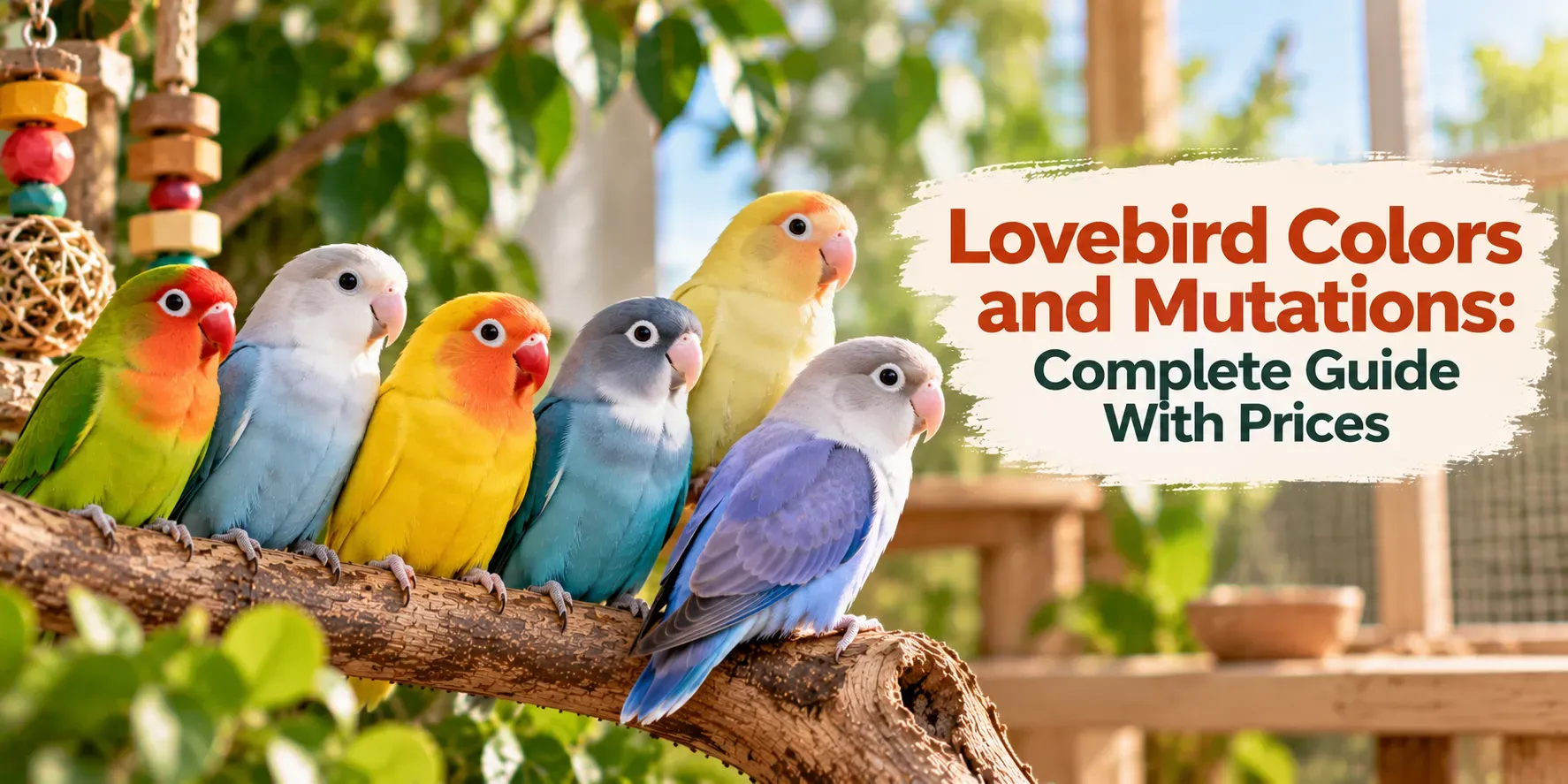
Lovebirds are small, but they come in a surprising range of colors. A walk through a lovebird aviary can look like a box of crayons, with bright greens, soft blues, glowing yellows and pure whites all sitting side by side. If you have been searching for lovebird colors, you have probably run into names like Dutch Blue, Lutino and Opaline and wondered what they mean. This guide explains every popular color in plain language, with current prices and tips for choosing.
Peach Faced and Rosy Faced: one species, two names
Most of the color variety in lovebirds comes from the Peach Faced Lovebird (Agapornis roseicollis), which is also sold as the Rosy Faced Lovebird. They are the same bird. The wild form is green with a peach to rosy pink face, and breeders have developed many mutations from it. If you want to compare it with the other two common species, read our Lovebird species comparison.
The most popular lovebird colors
| Color | What It Looks Like | Price 2026 |
|---|---|---|
| Green (Normal) | Wild type green with a peach face | $80 to $180 |
| Dutch Blue | Blue body with a white face | $150 to $280 |
| Turquoise | Blue green body | $200 to $350 |
| Lutino | Bright yellow body, peach to red face, red eyes | $150 to $280 |
| Albino | Pure white body with red eyes | $300 to $500 |
| Pied | Patches of yellow or white on a colored body | $150 to $250 |
| Cinnamon | Soft, warm brown toned version of the base color | $180 to $300 |
| Opaline | More even, brighter color across the back and wings | $180 to $320 |
| Violet | Deep violet blue tone | $250 to $400 |
| Pallid | A softer, washed out look | $180 to $300 |
| Rare combinations | Two or more mutations together | $300 to $500 |
For a deeper breakdown of how lovebird pricing works, see our Lovebird price guide.
Green (Normal): the classic
The wild type lovebird is a bright leafy green with a peach to rosy face and a blue rump. It is the most common and the most affordable color, and it is every bit as sweet and lively as a rare mutation. If you want a lovebird mainly for personality, a Green is the best value.
Dutch Blue and Turquoise: the cool colors
Dutch Blue replaces the green with blue and the peach face with white, giving a clean, crisp look that many people love. Turquoise sits in between, with a blue green body that looks like tropical water. Both are common enough to be easy to find, but they cost more than Green because they take planned breeding.
Lutino and Albino: the bright whites and yellows
Lutino removes the dark pigment and leaves a glowing yellow bird with a peach to red face and red eyes. Albino goes a step further and produces a pure white bird with red eyes. These colors are striking but the birds can be slightly more sensitive to bright light, so a bird room with soft natural light is ideal.
Pied, Cinnamon, Opaline, Violet and Pallid
Pied birds carry random patches of yellow or white, so no two look the same. Cinnamon warms and softens the color. Opaline changes the way color is distributed so the bird looks brighter and more even. Violet adds a deep violet blue tone, and Pallid gives a softer, washed out look. Many of these can be combined, which is where the rare and most expensive lovebirds come from.
Fischer’s and Masked lovebird colors
Fischer’s Lovebirds are olive green with an orange red face, and they come in fewer mutations, with Blue and Lutino being the best known. Masked Lovebirds have a black head, a yellow collar and a green body in their normal form, and they also come in Blue and Yellow varieties, often sold as blue masked lovebirds. Prices for these species generally run $100 to $350, depending on the color.
Does color change a lovebird’s personality?
No. A Dutch Blue is exactly as bold, playful and affectionate as a Green, and a Lutino is as vocal as an Opaline. Individual personality comes from how the bird was raised and handled, not from its color. Choose the color you love, and focus on buying a hand raised bird that is used to people.
Lovebird color genetics in plain language
Lovebird colors are inherited, and many mutations are recessive, which means a bird can carry a color gene without showing it. Breeders call these hidden carriers split birds. For example, a green lovebird that is split to blue looks green but can pass the blue gene to its chicks. This is why two green parents can sometimes produce a blue baby. If you are buying a bird for color, ask the breeder what the parents look like and what they carry, so you know what you are really getting.
Telling similar colors apart
-
Dutch Blue vs Turquoise vs Violet: Dutch Blue is a clean blue with a white face, Turquoise has a green tint in the blue, and Violet has a deeper, purple toned blue.
-
Cinnamon vs Pallid: Cinnamon looks brownish and warm, while Pallid looks softer and washed out.
-
Lutino vs Albino: Lutino is yellow with a peach to red face, while Albino is pure white with red eyes.
-
Opaline vs Normal: Opaline birds show brighter, more even color across the back and wings.
Because names are not completely standardized, it helps to ask for photos of the actual bird and, if possible, its parents.
Light, eyes and color
Birds with red eyes, such as Lutino and Albino lovebirds, often have less protective pigment, so they can be more sensitive to bright, direct light. Keep their cage in a bright room with soft natural light rather than in harsh direct sun, and provide shade so the bird can choose where to sit.
What does a lovebird cost to keep?
-
Cage: $100 to $300 for a cage of at least 18 by 18 by 24 inches
-
Perches, bowls and toys: $50 to $150
-
Food in the first year: $120 to $240
-
Avian vet in the first year: $150 to $350
-
Emergency fund: $300 minimum
Common mistakes when buying a lovebird by color
-
Paying a premium for a color without checking that the bird is hand raised and used to people.
-
Assuming a rare color means a calmer or friendlier bird. It does not.
-
Buying two birds because of the myth that lovebirds must live in pairs.
-
Skipping the questions about DNA sexing and health testing.
Single bird or pair?
A single hand raised lovebird with daily human contact bonds closely to its owner. Two lovebirds housed together tend to bond to each other. Either works, but know which you want before you buy. Our Parrotlet vs Lovebird comparison and Lovebirds buying guide explain the trade offs in detail.
How to choose a lovebird color
-
Want the best value: Green (Normal).
-
Want a clean, cool look: Dutch Blue.
-
Want something bright and cheerful: Lutino.
-
Want something rare: Violet, Albino or a combined mutation.
-
Want a one of a kind bird: Pied.
How long do lovebirds live?
About 15 to 20 years with good care, whatever the color. Compare them with other species in our parrot lifespan chart.
Where to buy a lovebird
At Morphnests we hand raise lovebirds in a range of colors. Browse the lovebirds category page, check the new born babies page, or contact Mo directly about a specific color. Buyers in Southern California can visit the aviary, and Texas buyers can have a bird shipped safely nationwide. For everything to know before you buy, see our lovebirds for sale guide.
Frequently asked questions
What colors do lovebirds come in?
Common colors include Green, Dutch Blue, Turquoise, Lutino, Albino, Pied, Cinnamon, Opaline, Violet and Pallid, with many combinations.
What is a Dutch Blue lovebird?
A Peach Faced Lovebird with a blue body and a white face instead of the usual green body and peach face.
Is a Rosy Faced Lovebird the same as a Peach Faced Lovebird?
Yes. They are two names for the same species, Agapornis roseicollis.
What is the most expensive lovebird color?
Rare combined mutations and Albino are usually the most expensive, reaching $300 to $500.
Does color change a lovebird’s personality?
No. Color is cosmetic and does not change temperament, noise level or lifespan.
How long do lovebirds live?
About 15 to 20 years with good care.