Palm Cockatoo: Price, Care and the Truth About This Rare Giant
Updated October 7, 2026
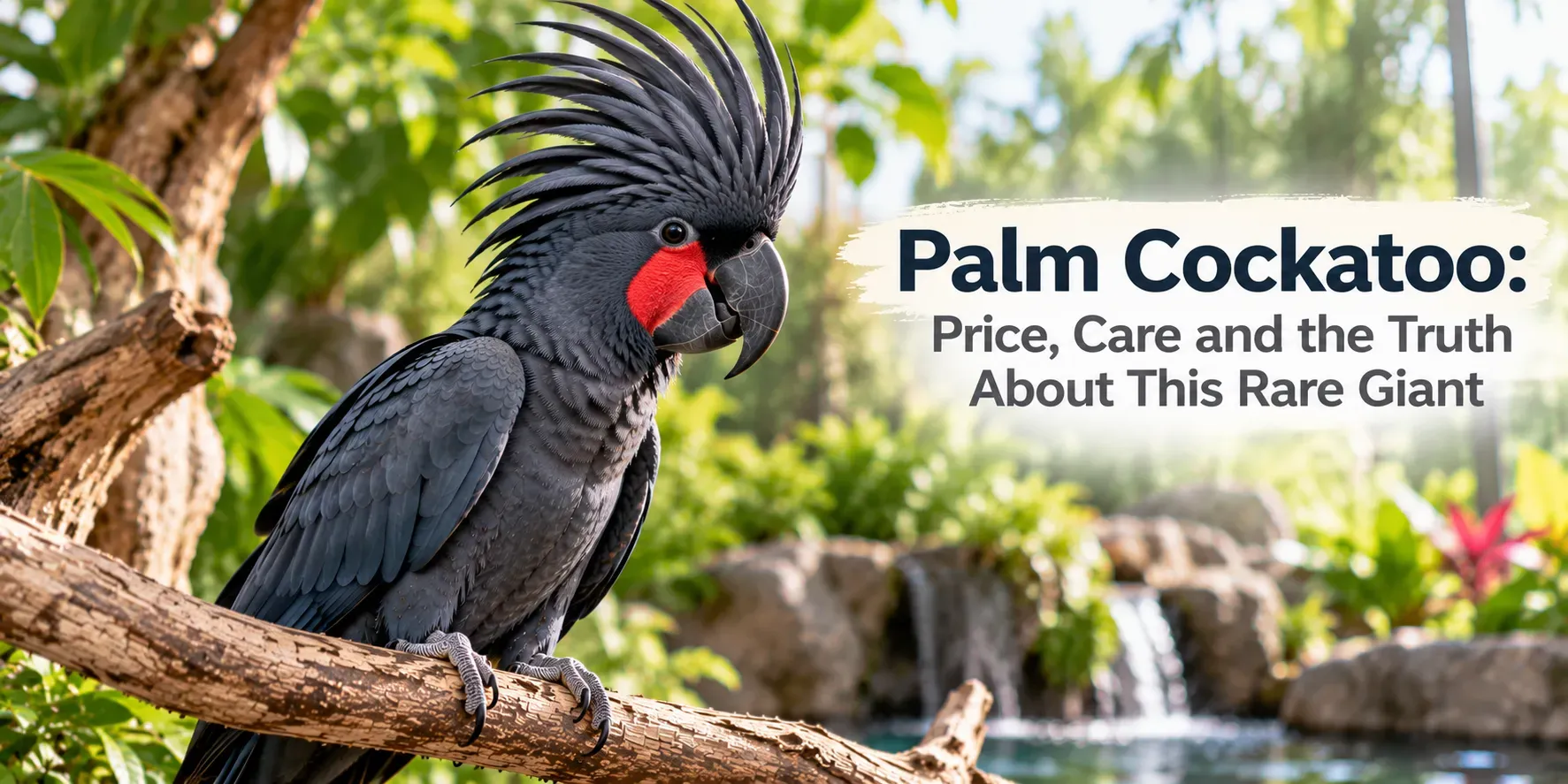
Few parrots stop people in their tracks like the Palm Cockatoo. Smoky black plumage, bare red cheek patches that flush when the bird is excited, a tall swept back crest and one of the largest beaks in the parrot world give it an almost prehistoric look. It is also famous for something no other bird does in quite the same way: it drums on hollow wood using a stick it has shaped itself. If you have searched for the Palm Cockatoo price, you are probably wondering whether this extraordinary bird is truly attainable. This guide gives you the real numbers and the honest picture.
What is a Palm Cockatoo?
The Palm Cockatoo (Probosciger aterrimus), also called the Goliath Cockatoo or Great Black Cockatoo, is native to New Guinea, the Aru Islands and the Cape York Peninsula of northern Australia. It is the only member of its genus, which means it has no close relatives among the other cockatoos you may know, such as the Umbrella, Moluccan or Sulphur Crested. It is the largest cockatoo in the world and carries one of the biggest bills of any parrot, second only to the Hyacinth Macaw.
What does a Palm Cockatoo look like?
-
Length: 20 to 24 inches
-
Weight: about 900 to 1,200 grams
-
Plumage: smoky black to charcoal grey, often with a dusty powder down finish
-
Cheek patches: bare crimson skin that can change color when the bird is alarmed or excited
-
Crest: long, narrow feathers that sweep back from the head
-
Beak: very large, black and sharply hooked, with a long upper mandible
The famous Palm Cockatoo drumming display
Wild male Palm Cockatoos snap off a stick or seed pod, hold it in one foot and beat it against a hollow trunk. The rhythm carries a long way through the forest and is thought to help defend territory and attract a mate. Each male is reported to have a signature beat. It is one of the few known examples of a bird making and using a tool to produce rhythmic sound, and it is a big part of why this species fascinates researchers and bird lovers alike.
Why is the Palm Cockatoo so expensive?
The price of a Palm Cockatoo is not about fashion. It reflects how hard the species is to produce.
-
A very slow breeding rate. Palm Cockatoos lay a single egg and a pair may only breed every second year. That is far below the output of species like cockatiels or conures.
-
Low success. Even when an egg is laid, hatching and rearing success is among the lowest reported for any parrot.
-
Specialist hand rearing. Chicks need carefully formulated feeding plans that differ from most other cockatoos, and they take a long time to wean.
-
Late maturity. Birds take years to reach breeding age, so a breeding program is a very long investment.
-
CITES Appendix I status. The species is protected because of trapping and habitat loss in the wild, so every bird must be traceable to legitimate captive breeding.
How much does a Palm Cockatoo cost?
A hand raised Palm Cockatoo costs $10,000 to $16,000 or more in the US in 2026, with the price depending on the individual bird, its documented lineage and availability. For a comparison against the rest of the family, see our Cockatoo cost guide.
| Cockatoo | Length | Price 2026 | Typical Lifespan |
|---|---|---|---|
| Goffin Cockatoo | 12 inches | $800 to $1,500 | 30 to 40 years |
| Umbrella Cockatoo | 18 inches | $1,500 to $3,000 | 50 to 70 years |
| Moluccan Cockatoo | 20 inches | $2,500 to $5,500 | 60 to 80 years |
| Major Mitchell’s Cockatoo | 13 to 16 inches | $2,500 to $5,000 | 50 to 80 years |
| Palm Cockatoo | 20 to 24 inches | $10,000 to $16,000 or more | 40 to 60 years |
Personality and temperament
Palm Cockatoos are intelligent, sensitive birds. Keepers often describe them as more reserved than a typical Umbrella and less constantly demanding of physical contact, but they still bond closely with their people and need daily interaction. They are not known as strong talkers, so owners value them for presence and character rather than vocabulary. Every individual is different, and a bird this rare deserves a keeper who is prepared to learn its specific personality over years.
Are Palm Cockatoos loud?
Yes. Palm Cockatoos have a wide range of calls that carry a long way, and their drumming and wood destruction are loud in their own right. They are not suitable for apartments, condos or any shared wall home. Detached housing with real separation from neighbors is a basic requirement.
Housing and daily care
Cage. A Palm Cockatoo needs a very large, heavy duty cage or a dedicated aviary room, bigger than what an Umbrella needs, with thick stainless steel construction. Their beaks can defeat ordinary bars and latches.
Enrichment. Large amounts of destructible wood, hardwood blocks and sturdy foraging toys are essential, because chewing and drumming are natural behaviors.
Diet. Work with an avian vet and your breeder on a diet built around quality pellets, fresh vegetables and tree nuts in measured amounts. Palm Cockatoos benefit from specialist guidance on fat and calorie balance.
Out of cage time. Plan for at least 3 to 4 hours of daily interaction, plus safe supervised exercise.
Health considerations
Palm Cockatoos are known to be affected by proventricular dilatation disease more often than many other parrots, so a relationship with an experienced avian vet and a breeder who tests and documents health is important. Our guide to the warning signs your parrot is sick explains the early symptoms every parrot owner should recognize.
How long do Palm Cockatoos live?
Typical captive lifespan is considered to be 40 to 60 years. The oldest confirmed individual on record was 56 years old in a zoo, and there are unconfirmed reports of far greater ages. Either way, this is a multi decade commitment that will outlast many careers. See our parrot lifespan chart to compare it with every other species.
Is a Palm Cockatoo the right bird for you?
A Palm Cockatoo may be right if you have many years of experience with large parrots, own detached property, can afford both the purchase price and specialist veterinary care, and have a written succession plan for the bird’s long life.
If you love the cockatoo personality but want something more attainable, our best beginner cockatoos guide and Goffin Cockatoo guide cover far more manageable options.
Questions to ask before reserving a Palm Cockatoo
-
Where did the bird hatch, and can the captive bred documentation be shown?
-
Has the bird been DNA sexed and tested for the diseases that affect large cockatoos?
-
How was the chick hand fed, and is it fully weaned and eating a varied diet?
-
What diet and feeding schedule should you follow at home?
-
Is there a clear plan for the bird’s care if your circumstances ever change?
That last question matters more than most buyers expect. A bird that may live for half a century or longer will almost certainly outlast its first keeper’s plans, so a written succession plan, naming who will care for the bird and how it will be funded, is part of responsible ownership for any large cockatoo.
How to inquire about a Palm Cockatoo
Palm Cockatoos are available through only a very small number of specialist programs, and every responsible placement starts with a conversation. You can contact Mo directly to talk through availability and whether this species fits your home, or browse the cockatoos category page to see the species currently offered. Buyers in Southern California can arrange a visit, and Texas buyers can discuss safe nationwide shipping once a bird is confirmed.
Frequently asked questions
How much does a Palm Cockatoo cost?
A hand raised Palm Cockatoo costs $10,000 to $16,000 or more in the US in 2026, making it one of the most expensive parrots available.
Why are Palm Cockatoos so expensive?
A breeding pair may lay only one egg every second year, breeding success is low, hand rearing needs specialist formulas, and the species is on CITES Appendix I, so very few chicks reach the market each year.
How big is a Palm Cockatoo?
Adults measure 20 to 24 inches in length and weigh roughly 900 to 1,200 grams, which makes them the largest of all cockatoos.
Do Palm Cockatoos talk?
They are not known as strong talkers. Most are noted more for their drumming displays and varied calls than for copying human words.
How long do Palm Cockatoos live?
Typical captive lifespan is considered to be 40 to 60 years. The oldest confirmed zoo bird reached 56, and there are unconfirmed reports of far greater ages.
Is a Palm Cockatoo a good first parrot?
No. Their size, noise, rarity, cost and specialist needs make them suitable only for very experienced parrot keepers.