Sun Conure vs. Green Cheek Conure: Noise, Size & Price Compared
Updated October 19, 2026
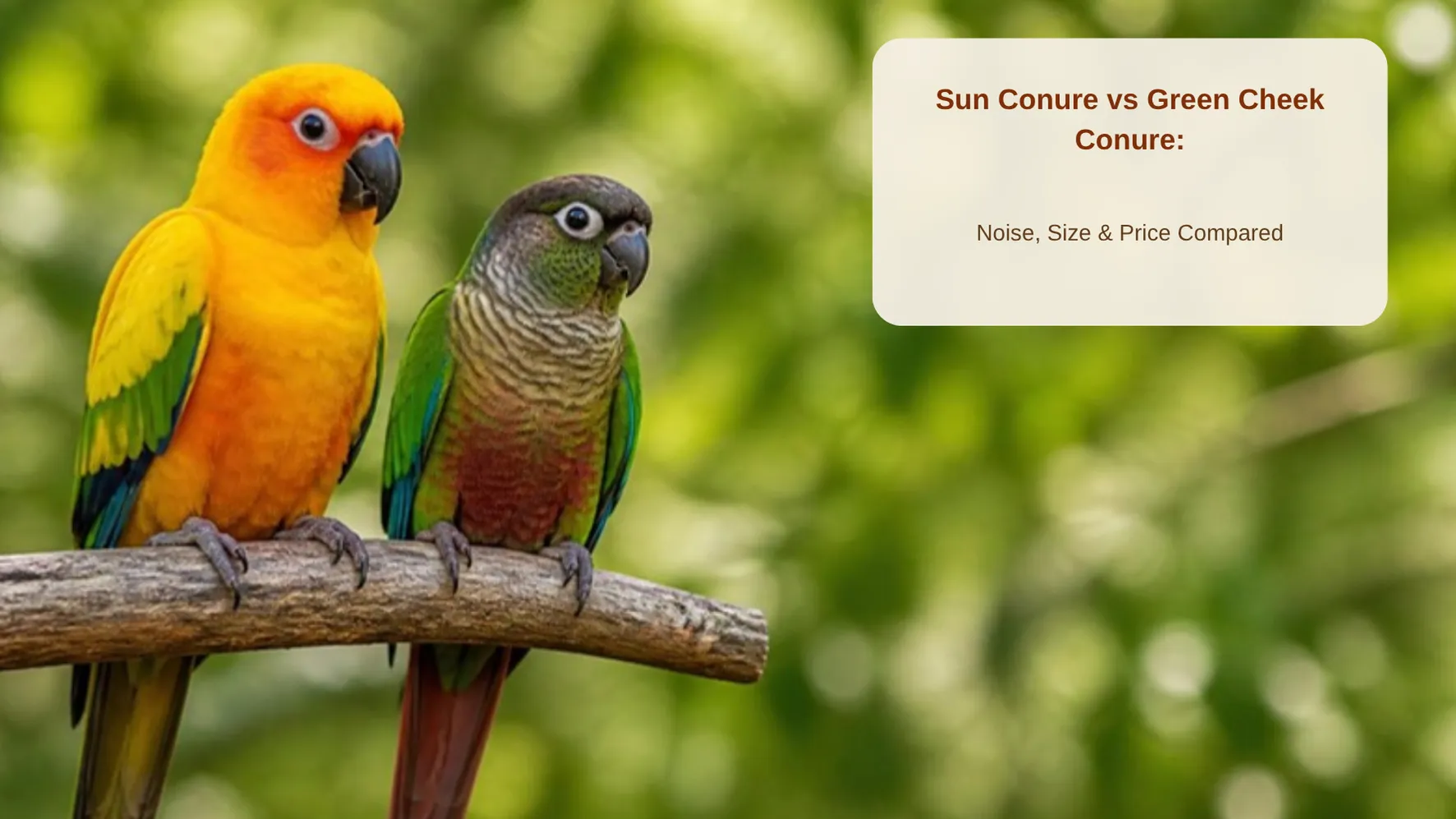
Sun Conure or Green Cheek Conure — it’s one of the most common questions we get from first-time conure buyers, and for good reason. Both are beloved conure species, both are endlessly playful, and both make incredible companions. But they’re actually quite different birds once you look past the “conure” label. This guide breaks down the real differences in noise level, size, color, personality and price, so you can pick the right one for your home.
Green Cheek Conure color mutations we offer
The Green Cheek Conure comes in more color mutations than almost any other small conure, and Morphnests carries several. Each is the same easygoing, quiet-for-a-conure temperament in a different color pattern:
See all current Conures for sale, or jump straight to our Green Cheek Conure for sale page for the base color.
The quick answer
If you live in an apartment, have close neighbors, or just want a calmer bird: go Green Cheek Conure. If you want the loudest colors in the flock and don’t mind a vocal, attention-loving bird: go Sun Conure.
Sun Conure vs. Green Cheek Conure at a glance
| Scientific name | Sun Conure | Green Cheek Conure |
|---|---|---|
| Scientific name | Aratinga solstitialis | Pyrrhura molinae |
| Price at Morphnests | $599.99 | $274.99 |
| Noise level | High — loud, frequent contact calls | Low to moderate — one of the quietest conures |
| Color | Brilliant yellow, orange and red | Green body with a maroon tail and grey-green cheeks |
| Personality | Bold, social, center-of-attention | Playful, cuddly, more independent |
| Talking ability | Moderate (20–50 words) | Moderate (20–50 words) |
| Lifespan | 25–30 years | 25–30 years |
| Best for | Experienced owners, houses, bird-savvy neighbors | Apartments, first-time owners, quieter households |
Noise level: the single biggest difference
This is the deciding factor for most buyers, and it’s not close. Sun Conures are one of the loudest small parrots you can own — their enthusiasm comes out as frequent, piercing contact calls, especially at dawn, dusk, and whenever they want attention. They’re not aggressive or unhappy, they’re just vocal by nature.
Green Cheek Conures are the opposite. They’re widely considered one of the quietest conure species available, which is exactly why they’re such a popular first bird for apartment dwellers. They’ll still chirp and chatter, but nothing like a Sun Conure’s volume.
If noise is your main concern, this alone should settle the decision.
Size and color
Sun Conures are the showier bird by far — a glowing mix of yellow, orange and red that looks like a sunset with wings. Green Cheek Conures are more understated: mostly green with a maroon tail, grey-green cheek patches, and (depending on the mutation) occasional yellow, cinnamon or pineapple coloring worked into the chest and head.
Green Cheek Conures also run smaller-bodied than Sun Conures, which adds to why they feel like a gentler, more manageable bird for a first-time owner — less bulk, less volume, and a bit less bite pressure if they do nip.
Personality and bonding
Sun Conures crave attention. They want to be seen, heard, and included in whatever you’re doing — leave one alone too long and you’ll hear about it. They bond hard with their person and can become quite demanding of interaction.
Green Cheek Conures are affectionate in a quieter way. They’re famous for burrowing into shirt collars, pockets and hoodies to nap pressed up against their owner, and they’re generally content to hang out nearby without constant engagement. Both species are smart and food-motivated, which makes them easy to train.
Price comparison
At Morphnests, a Sun Conure starts at $599.99 and a Green Cheek Conure starts at $274.99. That roughly $325 gap tracks with the market generally — Sun Conures cost more almost everywhere due to their striking color and higher demand, while Green Cheeks are one of the more affordable conure species you can buy hand-raised and DNA-sexed.
Both prices include hand-feeding from hatch and disease testing; DNA sexing, a full disease panel and a starter kit are available as add-ons at checkout.
Which one talks more?
Neither species is a strong talker compared to something like an African Grey or Amazon. Both Sun Conures and Green Cheek Conures land in the same moderate range — expect a working vocabulary of roughly 20 to 50 words or sounds with consistent training, not full conversations.
Which one should you buy?
-
Want the boldest colors and don’t mind the volume: Sun Conure.
-
Live in an apartment or want the quietest conure you can get: Green Cheek Conure.
-
Want a cuddly bird that naps in your hoodie: Green Cheek Conure.
-
Want a showpiece bird that commands the room: Sun Conure.
-
First-time bird owner: Green Cheek Conure is the easier, more forgiving starter bird.
Ready to bring one home? Browse our current Sun Conures and Green Cheek Conures for sale, or see every conure species we carry.
Care requirements
Day-to-day care is nearly identical between the two species — both need a cage at least 20 by 20 by 24 inches, daily time out of the cage, a varied pellet-and-produce diet, and routine avian vet checkups. The real difference in “care” is really about noise tolerance: a Sun Conure needs an environment (and neighbors) that can handle its volume, while a Green Cheek Conure fits comfortably into tighter living situations.
Frequently asked questions
Is a Sun Conure louder than a Green Cheek Conure? Yes, significantly. Sun Conures are among the loudest small conures, while Green Cheek Conures are one of the quietest.
Which is better for a first-time bird owner? Green Cheek Conures are generally the easier starter bird — quieter, smaller, and just as affectionate.
Do Sun Conures or Green Cheek Conures talk more? Neither is a strong talker. Both typically learn a moderate 20 to 50 words with training.
How much does a Sun Conure cost vs. a Green Cheek Conure? At Morphnests, Sun Conures start at $599.99 and Green Cheek Conures start at $274.99.
How long do Sun Conures and Green Cheek Conures live? Both species typically live 25 to 30 years with good care.
Can Sun Conures and Green Cheek Conures live together? They can in some cases, but temperament and cage setup matter more than species — introduce any two conures slowly and under supervision.