Sun Conure for Sale: How to Buy a Hand Raised Sun Conure and Bring It Home
Updated October 22, 2026
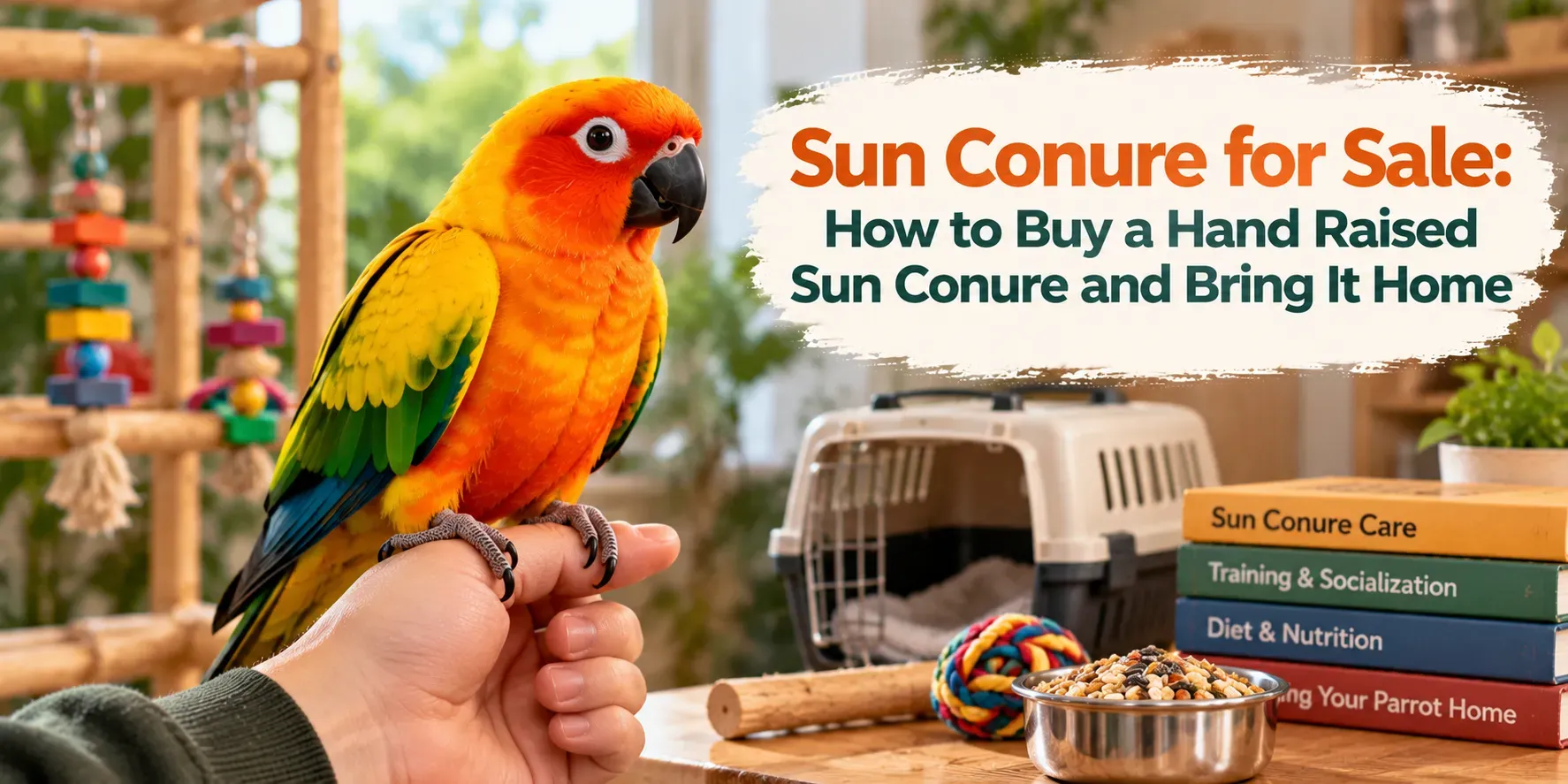
Few small parrots turn heads like a Sun Conure. The blaze of orange, yellow and a touch of green is hard to forget, and the bird’s cheerful, clownish personality only adds to the appeal. If you are searching for a Sun Conure for sale, you probably want three things: the real price, an honest picture of what living with one is like and a clear way to buy. This guide covers all three, including what to expect from a baby and what the noise really means for your home.
Sun Conures for sale: price and what is included
Morphnests lists hand raised Sun Conures starting at $599.99, and typical prices across the US run $500 to $850 in 2026. You can see the current birds on the Sun Conure product page or browse every species on the conures category page. For the full breakdown of what drives the price, read our Sun Conure cost guide.
| What you get | Details |
|---|---|
| Hand raised baby | Fed by hand and socialized daily |
| Health | Disease tested before it goes home |
| DNA sexing | Available |
| Delivery | USPS Priority Express overnight or Delta Cargo to all 50 states |
| Support | Lifetime support from Mo |
Buying a baby Sun Conure
Most buyers want a baby, and that is a good instinct. A baby that was hand fed from about 3 weeks of age and fully weaned at 10 to 14 weeks is used to people, curious and quick to bond. Younger is not always better, though. A bird that is not fully weaned still needs formula feedings and is not ready to travel. Always ask the aviary whether the bird is eating on its own before you commit. A baby Sun Conure also looks different from an adult. Young birds often show duller green and orange feathers that brighten into full color over the first year.
How to buy a Sun Conure step by step
-
Read the noise and size sections below to make sure a Sun Conure fits your home.
-
Contact Mo and ask which birds are weaned and ready.
-
Ask for recent photos and video of the exact bird.
-
Confirm health testing and ask about DNA sexing.
-
Choose USPS Priority Express overnight or Delta Cargo delivery, or arrange a visit.
-
Set up the cage, food and toys before the bird arrives.
Ready to start? Contact Mo or call (310) 901-6896.
The honest truth about Sun Conure noise
Sun Conures are very loud. Their calls can reach well over 100 decibels, and they tend to call at sunrise, sunset and whenever they want attention. This does not mean you cannot own one, but it does mean you should think about your neighbors and your walls. They suit a house better than a shared wall apartment. If you want the same playful personality with far less volume, a Green Cheek Conure is a better match. Compare them in our Sun Conure vs Green Cheek Conure guide.
How big is a Sun Conure?
An adult Sun Conure is about 12 inches long, including the tail, and weighs 110 to 130 grams. Its wingspan is roughly 20 to 22 inches. That means it needs a cage of at least 24 by 24 by 36 inches and plenty of time out to fly and climb. See the details in our Sun Conure size guide.
Daily care for a Sun Conure
-
Out of cage time: at least 3 hours daily.
-
Diet: about 60 to 70 percent pellet, 20 to 30 percent fresh vegetables and a little fruit, with seeds as treats.
-
Enrichment: foraging toys, shreddable items and chewable wood, rotated weekly.
-
Sleep: 10 to 12 hours of dark, quiet sleep each night.
-
Bathing: most Sun Conures love a shallow dish or a gentle misting.
How shipping works for a Sun Conure
Mo ships to all 50 states using either USPS Priority Express overnight or Delta Cargo airline transport, and every box and heat pack is chosen with the bird’s safety first. The process is explained on our shipping page. If you live near the aviary, buyers in Southern California can arrange a visit, and buyers in Texas can see how delivery works to their major airports.
Are Sun Conures good first birds?
They can be, if the owner is ready for the noise and the energy. Sun Conures are affectionate, playful and very social, and they bond strongly with their people. They also bite when frightened or overstimulated and need consistent handling. A first time owner who reads body language, offers lots of time and has tolerant neighbors can do very well. Someone in a small apartment or who is out all day will find a quieter species easier.
Sun Conure or Jenday Conure?
Buyers often confuse the two. The Sun Conure is mostly orange and yellow, while the Jenday has green wings and back with an orange body and yellow head. Both are loud and playful, and both have similar prices. If you want the full orange and yellow look, choose the Sun. Compare them in our Jenday Conure guide.
If the noise worries you
If you love conures but want a quieter bird, the Green Cheek Conure and the Crimson Bellied Conure are much better matched to apartments and shared walls. Our conure price guide compares every popular conure, including price and noise level.
Should you buy one Sun Conure or two?
A single hand raised Sun Conure that gets plenty of daily time with you will usually bond closely to you. Two Sun Conures housed together tend to bond to each other and may be less interested in people, although many owners enjoy watching a pair. Neither choice is wrong. Decide whether you want a companion that centers on you or a pair that entertains itself.
What to look for in a healthy baby Sun Conure
-
Bright, clear eyes and clean nostrils.
-
Smooth, tidy feathers with no bald patches.
-
An alert, curious posture and a willingness to step up.
-
A good appetite and well formed droppings.
-
Fully weaned and eating on its own.
Your first week with a Sun Conure
Keep the room calm and the routine steady. Offer the same food the bird ate at the aviary, then change it slowly. Cover the cage at night for 10 to 12 hours of sleep. Offer treats through the bars before asking for a step up. Most Sun Conures settle quickly and soon begin calling for you when you walk into the room, which is a sign of bonding.
What does a Sun Conure cost in the first year?
-
Cage: $250 to $600
-
Perches, bowls and toys: $100 to $250
-
Food: $300 to $500
-
Avian vet: $200 to $500
-
Emergency fund: $500 minimum
Do Sun Conures talk?
Some Sun Conures learn 10 to 20 words, and many pick up whistles and household sounds. They are not known as strong talkers, so choose one for its color and personality rather than its voice.
Questions to ask before you buy
-
How old is the bird, and is it fully weaned?
-
What is it eating now, so I can keep its diet the same?
-
Has the bird been tested, and can I see the results?
-
How and when will it be delivered?
-
What support is available after the sale?
Setting up the cage for your Sun Conure
Place the cage in a room where the family spends time, since Sun Conures want to be part of the action, but keep it away from drafts, direct afternoon sun and the kitchen. Use bar spacing of no more than five eighths of an inch, add perches of different widths for healthy feet and include at least one sleeping hut or cozy corner, because many conures love to snuggle into a covered space at night. A cage that is too small leads to boredom and louder calling, so go larger than the minimum if you can.
Ready to buy a Sun Conure?
See the birds on the Sun Conure product page, browse the conures category, check the new born babies page, or contact Mo with your questions.
Frequently asked questions
How much is a Sun Conure for sale?
A hand raised Sun Conure starts at $599.99 at Morphnests. Typical prices run $500 to $850 in 2026.
How much is a baby Sun Conure?
Baby Sun Conures cost the same as the rest of the range, around $500 to $850. A fully weaned baby is the easiest to bond with.
Can I buy a Sun Conure online?
Yes. Morphnests ships to all 50 states using USPS Priority Express overnight or Delta Cargo airline transport.
Are Sun Conures loud?
Yes, very. They are among the loudest small parrots, so consider your neighbors before buying.
Do Sun Conures talk?
Some learn 10 to 20 words, but they are not chosen for talking. They are chosen for color and personality.
How long do Sun Conures live?
Typically 20 to 25 years with good care.